Cancer Gene Shocker
Learning that I Have a cancer gene
I was surprised to find out that I have an inherited gene variant associated with an increased risk of certain cancers. There was no significant history of breast or ovarian cancer in my family.
After our surgeries, Joel and I were both given the option of having genetic blood testing to determine whether we carried an inherited genetic variant associated with our types of cancer. I decided to do the testing simply because we had already gone through the process with Joel, and I knew the genetic counselor. I was sure my results would come back negative, as Joel's had, but surprisingly, they did not.
The doctor walked into the treatment room at my follow-up appointment and said, “Oh, Julie, this whole journey has been hard on you. I'm sorry to share this news, but you have a gene that increases your risk of cancer. You inherited this gene from one of your parents.”
I just stood there in shock.
I was alone at the appointment because Joel had a conflict in his schedule, and we both thought this would be a quick, routine appointment where I would learn that my cancer had nothing to do with genetics. That was what had happened at his follow-up appointment.
Because of Joel's Jewish heritage and colon cancer diagnosis, hereditary cancer syndromes, including Lynch syndrome, were considered as part of his genetic evaluation. We thought there was a greater chance of finding an inherited cancer risk for him than for me.
The doctor explained that an inherited genetic variant is present in cells throughout the body. For a brief moment, all I heard was, “I'm defective!” But I calmed myself down and listened to what she had to say.
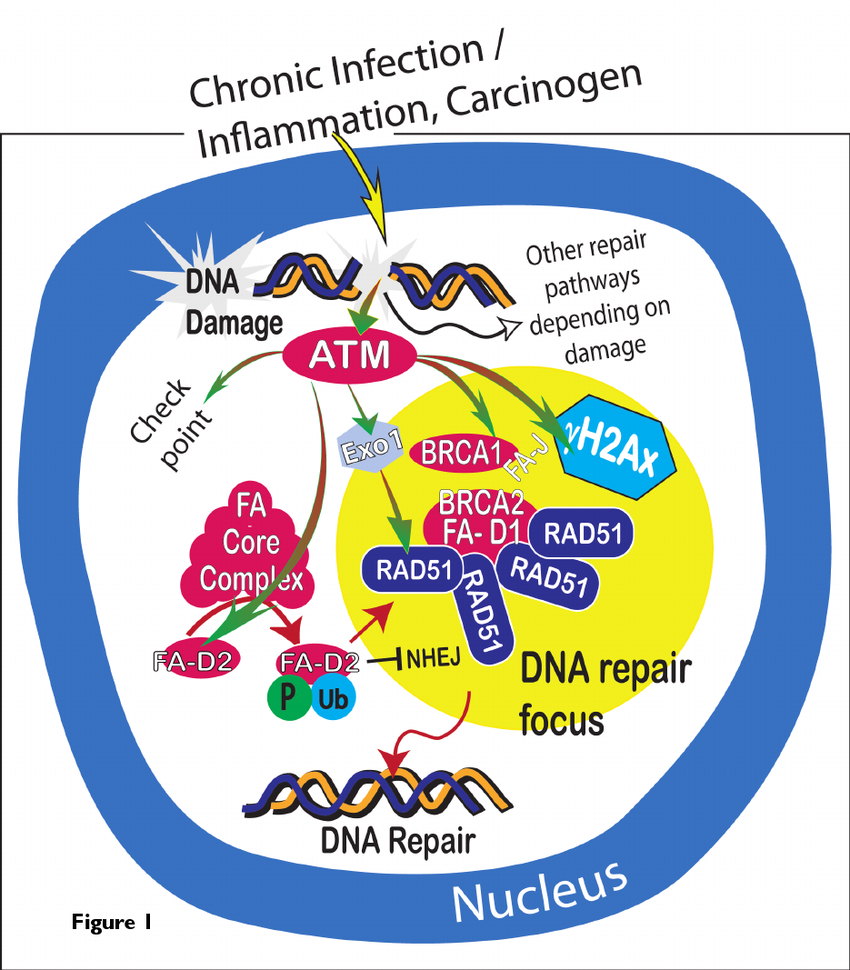
An image showing the DNA damage and breakdown that occurs with cancer genes.
That day, I learned that I carry a pathogenic variant in a gene called RAD51D. RAD51D is involved in repairing damaged DNA. Certain inherited variants in this gene are associated with an increased risk of ovarian cancer and breast cancer, although the risks are different from those associated with BRCA1 and BRCA2. Research into RAD51D and its associated cancer risks continues to evolve.
BRCA1 and BRCA2 are two of the best-known hereditary cancer genes. These genes normally help repair damaged DNA and protect against cancer. Certain inherited variants can interfere with that function and increase the risk of developing breast, ovarian, and several other cancers.
A positive genetic test does not mean that someone currently has cancer or that a person who carries a pathogenic variant will definitely develop cancer. It means that the person's risk of developing certain cancers may be higher than that of the general population.
There is still so much to learn about genetics and cancer, and this continues to be an active area of scientific research.
My oncologist explained that RAD51D had only relatively recently become recognized as an important hereditary cancer susceptibility gene and that researchers were still learning about the extent of the associated risks. Cancer genetics continues to evolve, so she encouraged me to stay informed as new research and recommendations became available.
My Decision to get a Full Hysterectomy
My oncologist was particularly concerned about my increased risk of ovarian cancer. RAD51D pathogenic variants are associated with an increased lifetime risk of ovarian cancer, and current research estimates that risk at approximately 5% to 10%, although an individual's risk can vary based on family history and other factors.
Since I still had my ovaries and wasn't yet in menopause, she strongly recommended that I consider risk-reducing surgery. Due to my genetic results and an area of concern that had appeared on my PET scan, I decided to have my ovaries removed as part of a total hysterectomy.
Perhaps genetics had played a role in why I developed cancer. I had been racking my brain trying to understand how this had happened to me, so having a possible genetic explanation brought me some relief in those confusing moments. My diet and lifestyle had been important to me for more than 20 years. I also believed that stress had affected my health, while recognizing that I would probably never know exactly why I developed cancer.
What This Means For My Family
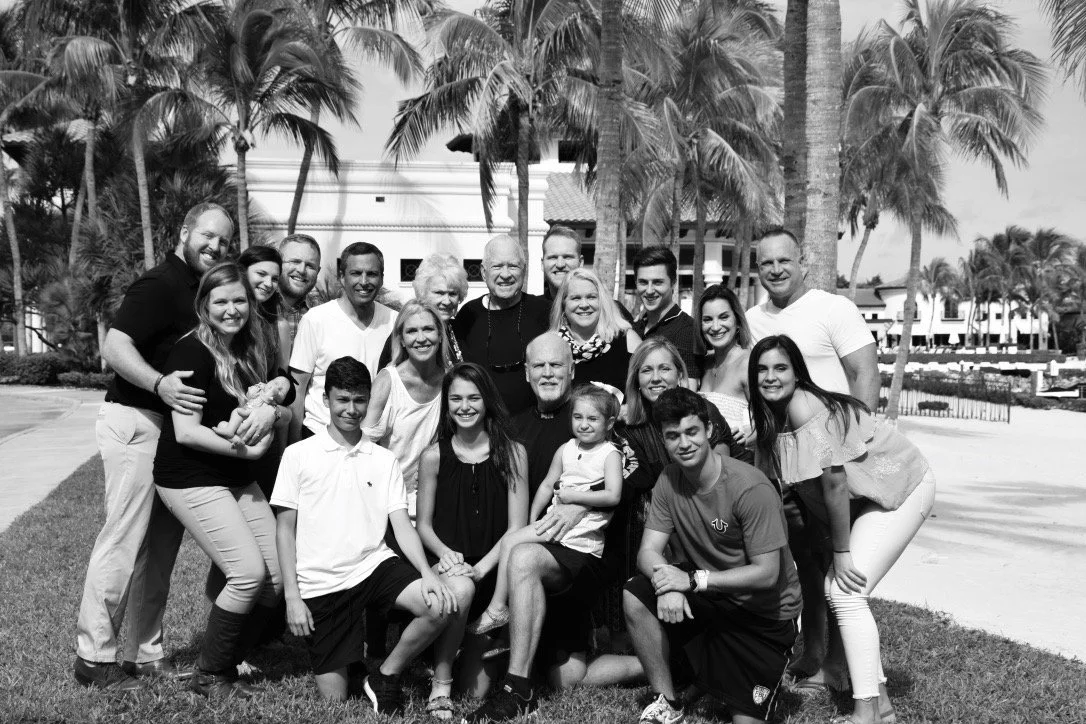
Right after my surgery, the cancer center did a family genetics blood test. It took over a month to come back. I had an appointment with an oncologist who handles genetics. It was a shocking moment to learn that I have the cancer gene!
The doctor gave me information about the gene, along with information my family members could take to their doctors to discuss genetic testing.
“Oh, my family!”
My mind immediately raced to my family—and especially my own kids. Because RAD51D variants are inherited in an autosomal dominant manner, each child of someone carrying a pathogenic RAD51D variant has a 50% chance of inheriting that variant.
After the appointment, I went outside and tearfully called my sisters. There was silence on the other end. One of my sisters was very curious, while the other seemed distant and disinterested. I didn't blame her. When I called my brother, he wasn't able to absorb the news at first, but later he became extremely interested and eventually planned to get tested.
My youngest sister was tested, and it turned out that she carries the same gene variant. Her doctor investigated some cysts on her ovaries and told her that learning about my genetic results could prove very important for her health. My sister had an oophorectomy a few months later, and there was no sign of cancer. Hurray!
In the years that followed, I became increasingly curious about whether we had inherited the gene from my mom or dad. I also became concerned about my cousins and their children and grandchildren. I wanted to be sure relatives on the affected side of the family had the opportunity to learn about the gene and consider genetic counseling or testing for themselves.
My dad died in 2020, and we never had the opportunity to have him tested. In early 2022, I asked my mom if she would be willing to be tested for the specific variant I carry. She agreed, and my genetic oncologist tested her.
We received the results on August 29, 2022: my mom was negative for the variant. This meant that the variant was not inherited from my mother and made my father's side the likely source, although without testing my father, we couldn't directly confirm that he carried it.
This was what I had suspected all along. My mom has seven sisters, and although there is some cancer history on her side, there isn't breast or ovarian cancer. My dad, on the other hand, had two brothers and very few women in his family. His mother died young after having multiple cancers.
When we got this news, a flood of emotions poured out of me. My dad's birthday had been the day before, so I was already missing him—but this news made me miss him even more.
The appointment also caused me to revisit the day I received the shocking news about my own genetic results. Sometimes tears are good. For me, they were a sign that I had come to grips with the gene, my diagnosis, and that I still had hope for the future. As 1 Thessalonians 4:13 reminds us, we do not grieve “as others do who have no hope.” I had tears, but I also had hope—and my hope was in Jesus.
Genetics vs. Epigenetics
Whether or not my RAD51D variant contributed to my cancer, I became increasingly interested in the relationship between genetics, lifestyle, environment, and health. Epigenetics is the study of changes that affect how genes are turned on or off without changing the underlying DNA sequence. Factors such as aging, environment, behaviors, and exposures can influence epigenetic processes.
This doesn't mean that lifestyle can simply “turn off” an inherited cancer-risk variant or eliminate hereditary cancer risk. However, our genes are only one part of a much larger picture when it comes to health and disease.
You've probably heard the expression:
“Genes load the gun, but environment pulls the trigger.”
I like the reminder behind that expression—that having an inherited risk doesn't mean we are powerless—but the science is more complicated than the saying suggests.
No matter what your genetic testing shows, there are still many aspects of your health that you can influence. Make a commitment to mastering the basics of your health routine. Visit the Flourish page to learn more.