Hello, Cannabis! Goodbye, Drugs!
After Joel’s sixth chemotherapy treatment, he was miserable with nausea, sleep deprivation, and pain. I was searching for something that might ease his symptoms. While sharing Joel’s symptoms with a friend, she suggested that we consider medical cannabis. I studied everything I could about the plant because we were desperate for a solution. I quickly realized how much I had misunderstood about the potential medicinal uses of cannabis.
Medical cannabis had recently become available in Florida, so we were thankful to learn that it might be an option for him. At our next oncology appointment, I asked the oncologist if Joel would be a good candidate for medical cannabis, and he said, “Oh, yes!” I said, “Great! How do we get him started?” He replied, “I have no idea, but when you find out, please let me know.”

This is how I felt when we threw away several of Joel’s prescription medications and he transitioned to medical cannabis! (Image from The Powerpuff Girls)
We walked into the chemotherapy room to start Joel’s treatment that day, and I felt like crying. I really wanted to find medical cannabis, but I was tired and had no idea where to look. I sat and prayed that God would guide me toward someone who could help me figure out the next steps.
Our friend, who is a primary care physician, came to mind because he is a traditional medical doctor but also holistic in his thinking. I texted him to ask if he could give us some direction in our search for medical cannabis. He texted me right back, saying, “You’re not going to believe this, but I am actually sitting here finishing my paperwork to incorporate cannabis into my medical practice. Joel will be my first patient. I’ll finish his application tonight.”
As a matter of fact, I could believe it. God, in His faithfulness, had answered my prayer right on time. I felt such peace and excitement about helping Joel find relief.
On our first visit to pick up medical cannabis, we were so confused! The medical cannabis program in Florida was still relatively new, so the whole process was new to us. We quickly incorporated cannabis and began noticing improvements in Joel’s symptoms. Over the next two weeks, we saw noticeable improvements in his nausea, sleep, and pain. With his medical care continuing, he was eventually able to stop several of the medications he had been using for side effects and used medical cannabis throughout the remainder of his treatment.
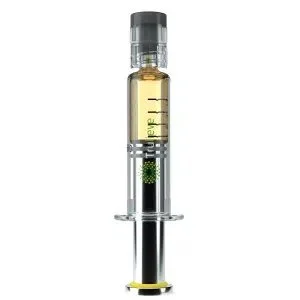
Cannabis in an oral syringe
Cannabis (Medical Marijuana)
Cannabis is the name of the plant; marijuana generally refers to cannabis products containing significant amounts of THC. Cannabis contains naturally occurring compounds called cannabinoids. Two of the best known are THC (delta-9-tetrahydrocannabinol) and CBD (cannabidiol). THC produces the “high” associated with marijuana and has been studied for symptoms such as chemotherapy-related nausea and vomiting, pain, appetite loss, and sleep difficulties. In fact, two cannabinoid medications, dronabinol and nabilone, are FDA-approved for chemotherapy-induced nausea and vomiting that does not respond adequately to standard anti-nausea medications. CBD does not produce the same intoxicating effect as THC. It is being studied for a variety of symptoms and conditions, but the evidence for treating cancer-related symptoms with CBD alone remains limited.
Medical cannabis is available in a variety of forms, which may include oils, tinctures, capsules, edibles, inhaled products, and topical preparations, depending on state regulations. Different products contain different amounts and ratios of THC, CBD, and other cannabinoids.
Finding the right product for Joel took some trial and error because different formulations affected him differently. During this difficult season of treatment, medical cannabis provided significant relief from his symptoms. I am so thankful we learned about this option when we did.