
JULIE’S KITCHEN

Your kitchen can be your most valuable healing tool!
Hippocrates said, “Let food be thy medicine and medicine be thy food.” Visit the Diet page to learn what I eat and why.
Below, see how I put my diet into practice—from setting up my kitchen and grocery shopping to food prep, meals, and healthy eating tips.
It took some adjustment, but over time, I found a rhythm that makes healthy eating much easier—and I feel amazing! When I veer off course, I simply get back on track. No one is perfect! Once you begin to flourish in your health, you’ll love the way you feel. It’s worth the effort!
-
Visit the DIET page to learn all about my diet—what I eat and why.
-
Learn how I set up my kitchen to prepare healing foods.
-
Print out my simple shopping lists for healthier shopping. Find the most convenient local solutions for purchasing produce regularly. Prep foods for the week to make healthy eating more simple.
-
I have built my eating plan with ten categories in mind. This plan ensures that I eat all the healthiest foods and consume enough calories. Learn some basic recipes to start building your eating plan.
-
All whole foods are miracles that God gave us. Research shows that nutrition prevents and treats cancer.
-
Learn about two plant foods that can be combined to taste like parmesan cheese and so many more practical food tips.
SET UP your Kitchen
The most important change I made in my kitchen was the food in my refrigerator. To make healthy food prep easier, I equipped my kitchen with helpful tools. Visit Julie’s Online Favorites for shopping suggestions, product recommendations, and links to purchase.
Shop and Prep
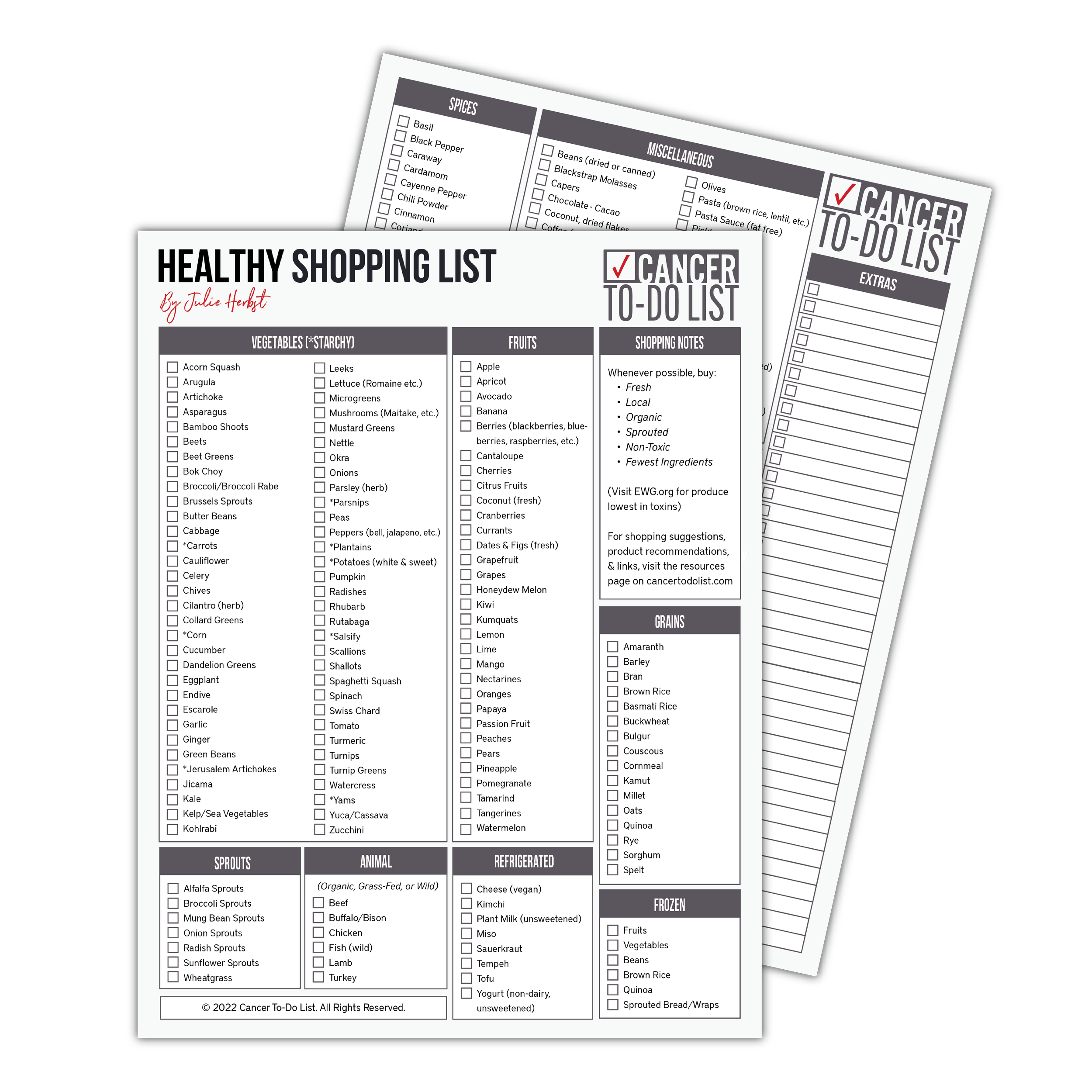
Julie’s Healthy Shopping List
Download my healthy shopping list to make grocery shopping simple!
Julie’s Online Food AND Groceries LIST
Visit Julie’s Online Favorites for shopping suggestions, product recommendations, and links to purchase.
Fruits, Vegetables & Sprouts
Choose organic when possible, but studies consistently show that the benefits of consuming non-organic plant foods outweigh the risks associated with exposure to herbicides and pesticides.
I buy organic whenever possible to reduce my exposure to contaminants such as glyphosate. Visit EWG.org to learn which fruits and vegetables have the highest pesticide residues.
Soaking non-organic fruits and vegetables in sea salt or baking soda and water for about 15–20 minutes can help remove contaminants.
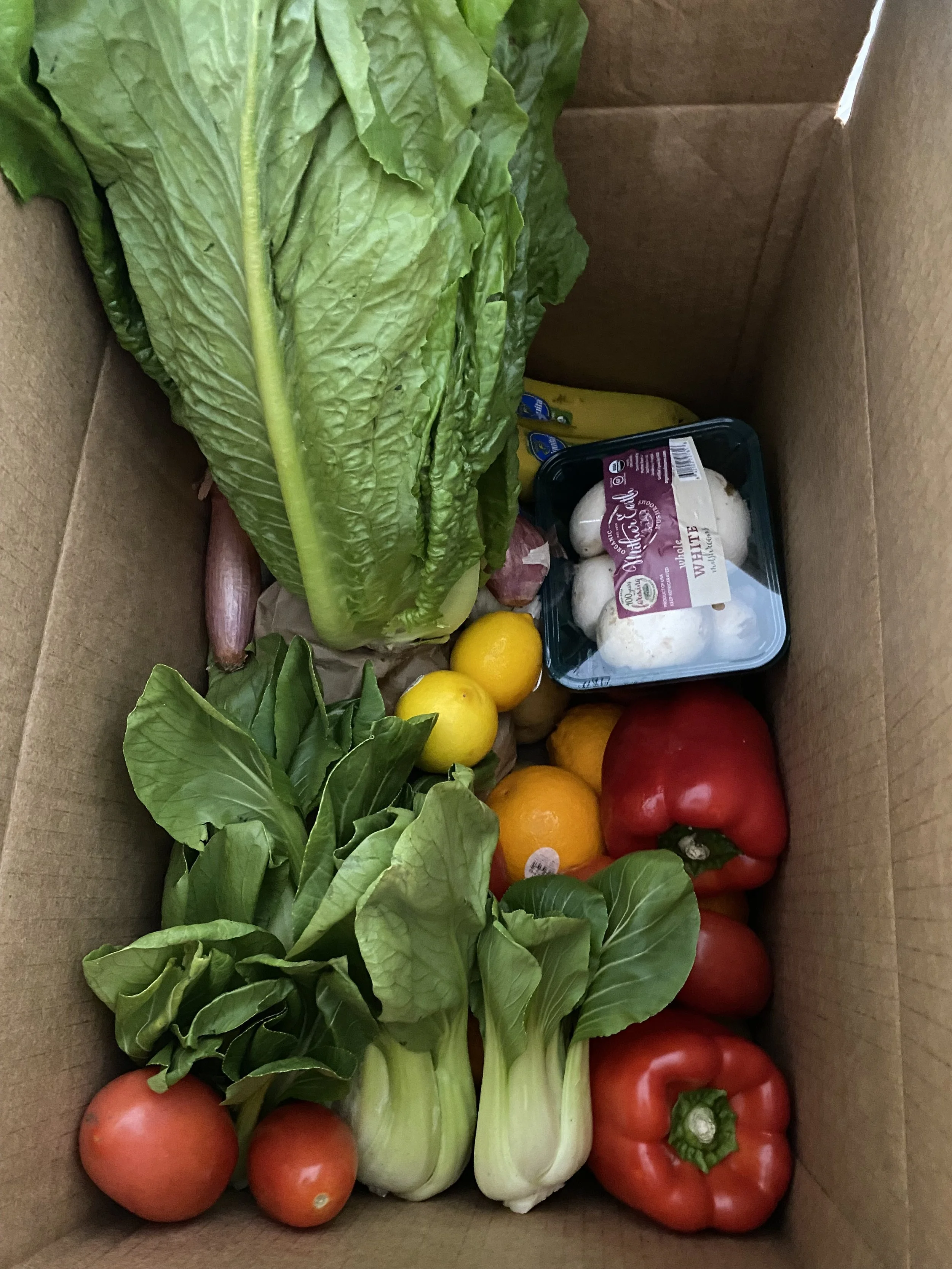
Find convenient local options that make it easy to keep fresh produce on hand:
Shop at a farmer’s market or store that offers local, organic produce.
Join a local co-op that delivers fresh fruits and vegetables. Many also offer foods such as homemade nut butters and whole-grain breads.
PREP for the week
Prep foods ahead of time to make healthy eating simple and convenient.
Bake potatoes and store them in the refrigerator to reheat throughout the week.
Cook a batch of rice and refrigerate to use throughout the week.
Cook beans or drain and rinse canned beans, then store in the refrigerator.
Make a large pot of soup to refrigerate and reheat as needed. (See recipes below.)
Wash and chop vegetables for salads, wraps, and stir-fries.
easy ways to cook without oil

Sauté USING VEGETABLE BROTH

BAKED POTATO TOPPED WITH SALSA
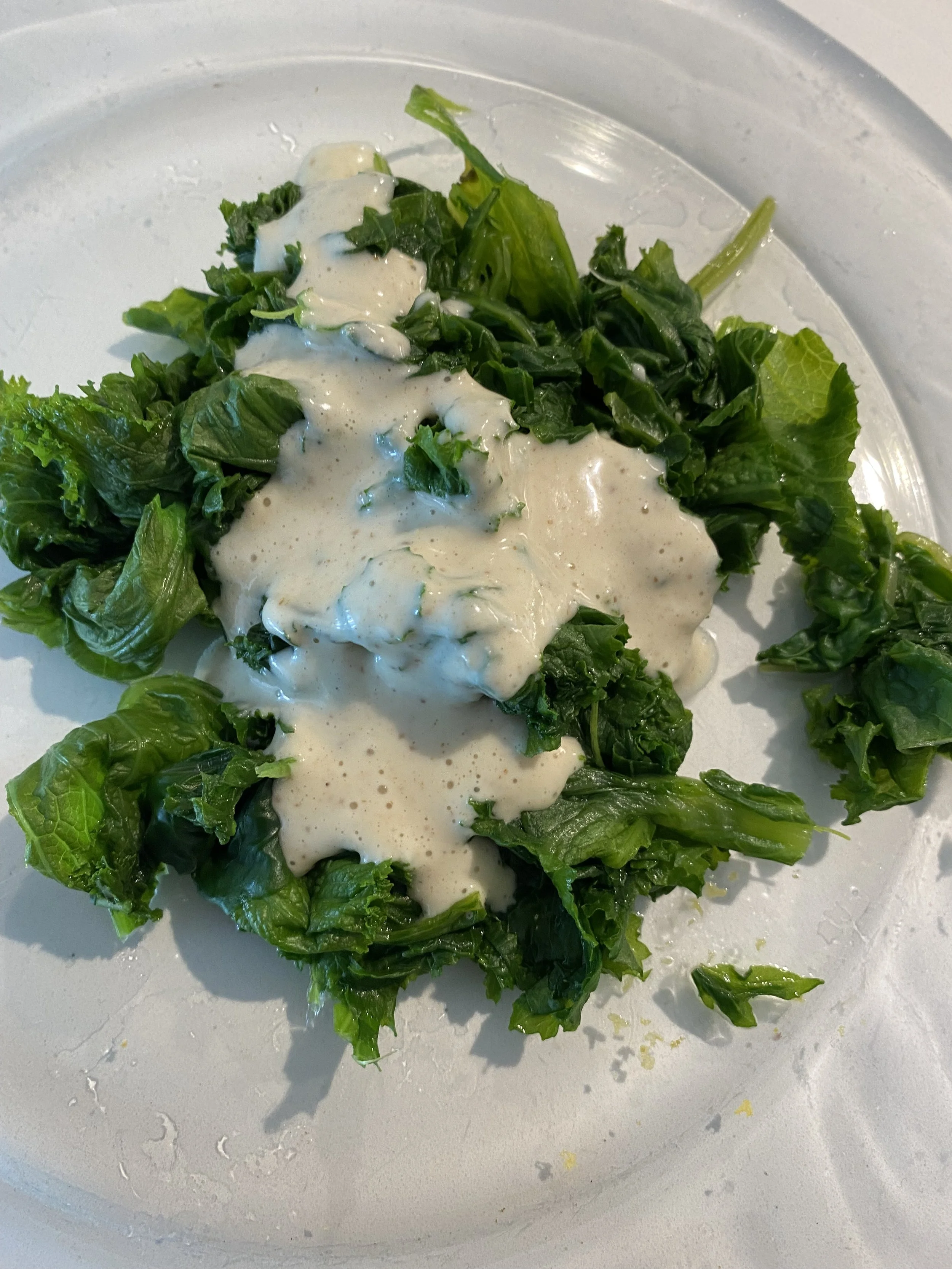
TAHINI DRESSING ON STEAMED GREENS

YUKON GOLD POTAFFLES

SPROUT SALAD WITH CASHEW, LEMON DRESSING
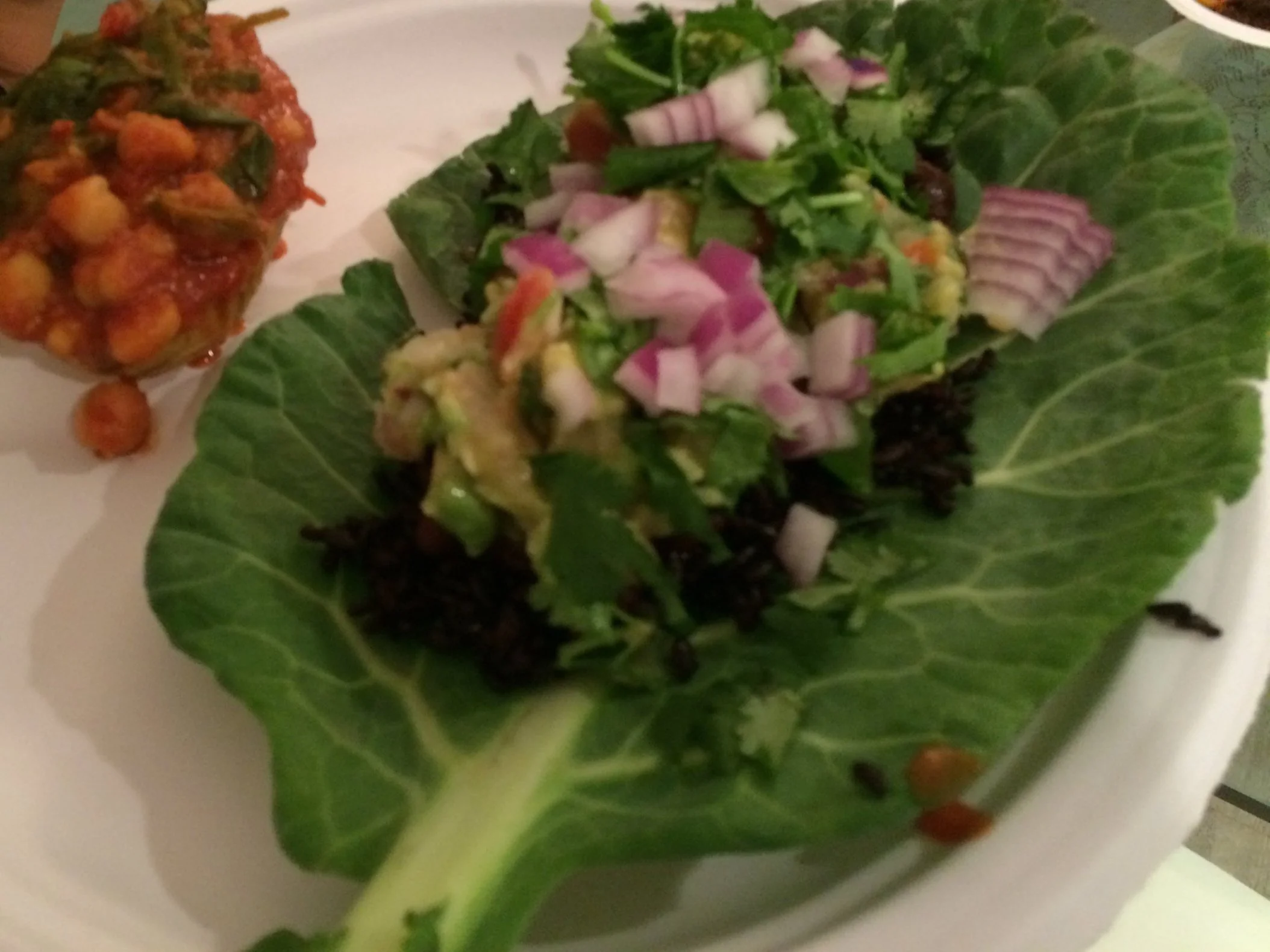
COLLARD GREEN WRAP
Broil, bake, steam, or grill instead of frying.
Sauté onions, garlic, and vegetables in water or vegetable broth. The natural juices from onions and garlic add plenty of flavor.
Add flavor with lemon or lime juice, balsamic vinegar, soy sauce, liquid aminos, vegetable broth, vegetable juice, Worcestershire sauce, herbs, and spices.
Marinate foods with lemon, orange, tomato juice or sauce, yogurt, onions, garlic, or vegetable stock.
Make oil-free salad dressings with ingredients such as dates, cashews, tahini, garlic, fresh lemon juice, vinegar (like rice vinegar), herbs, and spices.
Steam vegetables and finish with freshly squeezed lemon or lime for added flavor and increased nutrient absorption.
Limit foods with significant amounts of added oil, such as fried foods, chips, and many prepared salad dressings.
Julie’s Eating Plan
I have built my eating plan around ten categories to help me eat a variety of healthy foods, get enough calories, and eat consistently throughout the day. Below are some basic recipes and ideas to help you build your own eating plan around these groups.
TIMING OF MEALS
Eating smaller, more consistent meals throughout the day is a great way to make sure you consume enough calories and stay ahead of hunger. Research shows that eating more frequent meals, such as four to six mini meals, can increase metabolic rate (calories burned) and result in favorable changes in body composition.
If we don’t eat enough, blood glucose levels can drop, causing amino acids to be released from lean muscle mass and converted to glucose, which can compromise lean muscle mass. https://www.nejm.org/doi/full/10.1056/NEJM198910053211403 https://pubmed.ncbi.nlm.nih.gov/15085170/
Breakfast is important! Skipping breakfast has been associated with an increased risk of type 2 diabetes and cardiovascular complications. https://pubmed.ncbi.nlm.nih.gov/30418612/ https://pubmed.ncbi.nlm.nih.gov/26732562/
I try to finish eating each day by 7:00 PM. I’ve found that giving my body a couple of hours to rest and digest before bed works best for me.
A Typical Day of Eating for Me
7:00 AM — Breakfast: Smoothie made with a variety of nutrient-dense foods, including sprouts.
9:30 AM — Snack: Sprouted whole-grain cereal with raisins and almond milk, topped with cinnamon, ginger, nutmeg, and cloves.
1:30 PM — Lunch: Large salad with sprouts and vegetables, topped with an oil-free dressing such as rice vinegar, plus oil-free hummus and crackers.
3:30 PM — Snack: Vegetable soup with a variety of starchy and non-starchy vegetables.
6:00 PM — Dinner: Brown rice with steamed vegetables.
6:30 PM — Dessert: A bowl of fresh berries.
Smoothies
Smoothies can be a meal at any time of day, but I have mine for breakfast. They’re simple and so nutritious!
Breakfast is important. Skipping breakfast is associated with an increased risk of Type 2 diabetes and cardiovascular complications. https://pubmed.ncbi.nlm.nih.gov/30418612/ https://pubmed.ncbi.nlm.nih.gov/26732562/
julie’s Smoothie
Start your day with a nutrient-dense breakfast smoothie.
Combine the following ingredients in a high-speed blender until smooth.
8 ounces of water or plant milk
1 cup frozen fruit (blueberries, strawberries, etc.)
1 banana, optional
1 green apple, optional
Fresh vegetables (kale, spinach, freshly-grown sprouts, etc.)
Fresh or dried spices (cinnamon, nutmeg, etc.), optional
1 scoop plant-based shake mix, I use Juice Plus+ Complete
1 tablespoon organic, golden flax seeds (grind in a coffee grinder; do not use pre-ground flax seeds or flax oil)
1 tablespoon brewer’s yeast*
1 tablespoon green tea leaves*
Other possible add-ins: nut butters, additional seeds (see Seeds section below), etc.
*Brewer’s yeast and green tea leaves can be purchased from Wellness Forum Health. For ordering information, email shermankelly@wellnessforum.com

SEEDS
I always add flax seeds to my morning smoothie, but I also rotate other seeds from time to time. I have found other uses, such as sprinkling ground seeds on salads or soups. Remember these are higher in fat, so use sparingly (1 tablespoon or less). Here are some of my favorites:
FOOD POWDERS
These food powders can increase the nutrient density of your smoothies, enhancing your diet. Plant food powders have many uses, such as sprinkling on salads or soups. Here are some of my favorites:
OTHER BREAKFAST IDEAS:
Combine a bowl of cereal (dry or cooked) with a large bowl of fruit and/or vegetables such as cucumbers, celery, or steamed greens.
Sprouted dry cereal with raisins, almond milk, and spices such as cinnamon, ginger, nutmeg, and cloves.
Cooked cereal such as sprouted oatmeal (whole grain, not instant), topped with ground flaxseeds.
Sprouts
Sprouts are vegetables—and they are also medicine! Sprouts are seeds that have germinated and become very young plants. That’s why kids are called sprouts—they are little but have a lot of energy!
Sprouts are one of the most nutrient-dense foods in the world. Sprouting can increase the absorption of nutrients in seeds, beans, grains, and nuts because they become easier to digest. Sprouts may contain significantly higher levels of certain vitamins and minerals than their full-grown counterparts.
Prior to my diagnosis, I had purchased and eaten sprouts many times, but I didn’t fully understand their immense value, especially broccoli sprouts. Broccoli sprouts contain high levels of sulforaphane, a phytonutrient that has been widely studied for its potential anticancer properties. Sulforaphane influences cellular pathways and supports the body's detoxification processes.
TYPES OF SPROUTS
Healthline.com provides a thorough list of common types of sprouts:
Bean and pea sprouts: lentil, adzuki, garbanzo, soybean, mung bean, black bean, kidney bean, green pea, and snow pea
Sprouted grains: brown rice, buckwheat, amaranth, kamut, quinoa, and oats
Vegetable or leafy sprouts: radish, broccoli, beet, mustard green, clover, cress, and fenugreek
Nut and seed sprouts: almond, radish seed, alfalfa seed, pumpkin seed, sesame seed, and sunflower seed
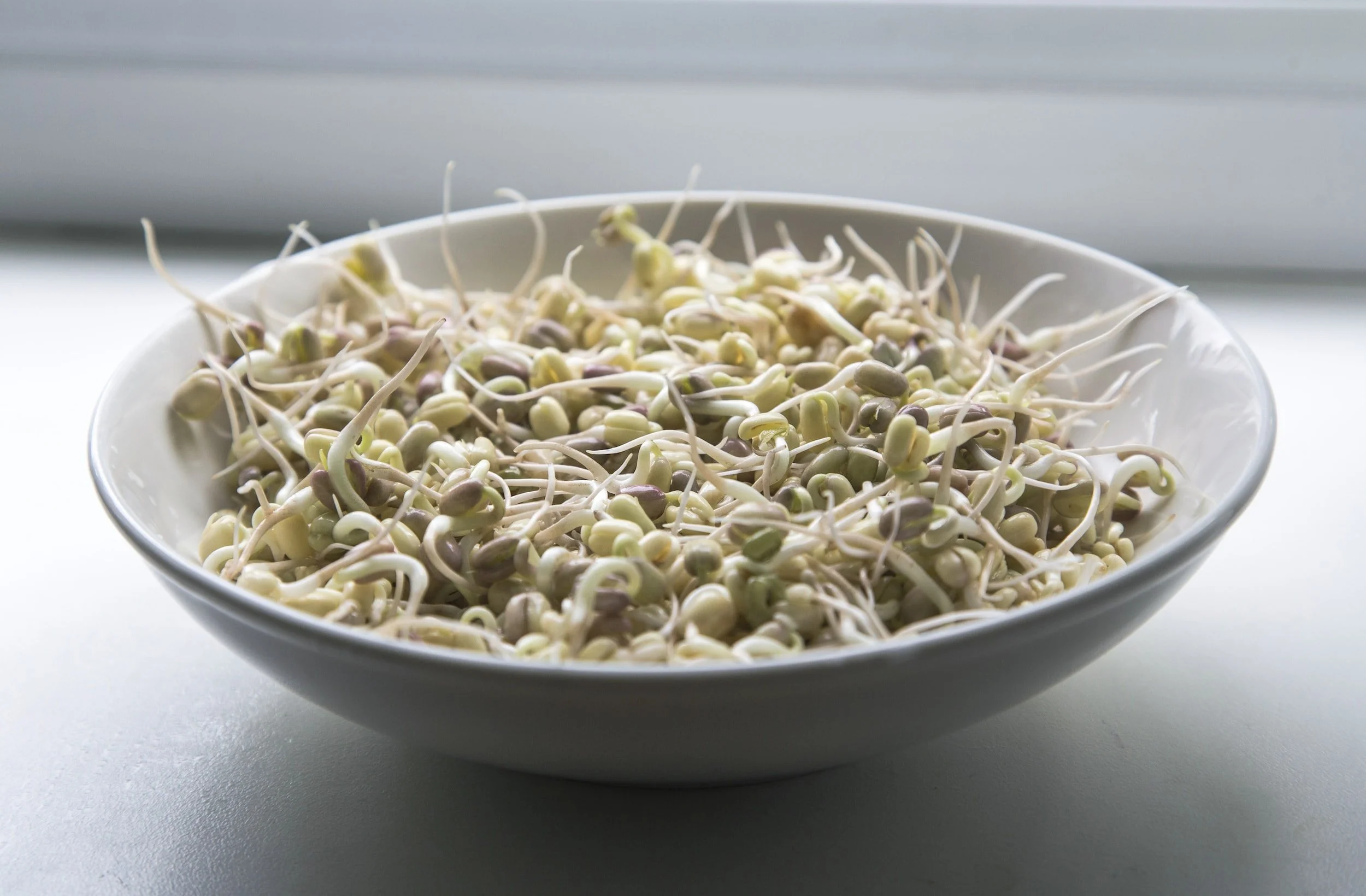

According to Dr. Will Bulsiewicz, author of Fiber Fueled Broccoli sprouts can produce 10 to 100 times more sulforaphane than mature broccoli.”
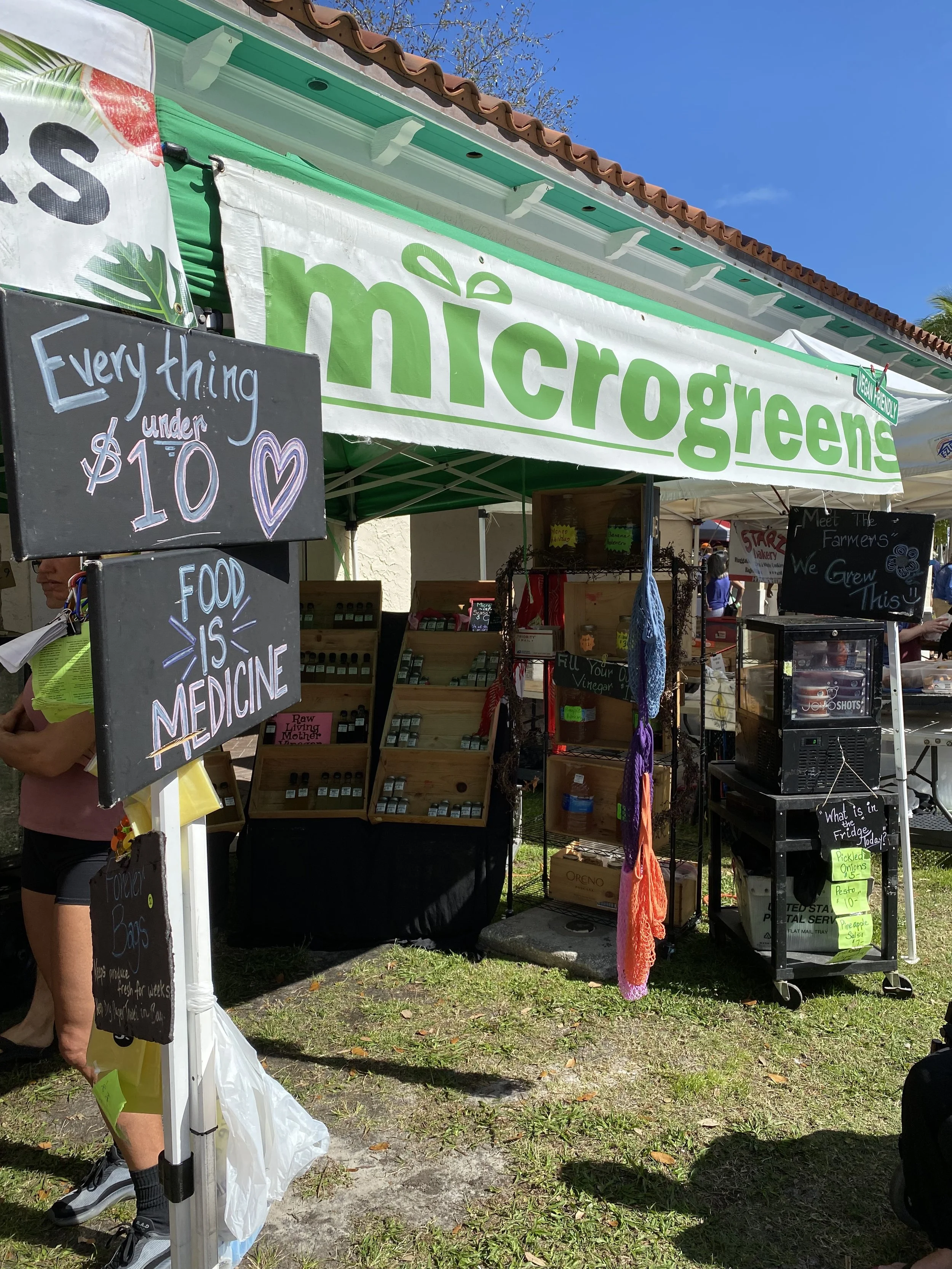
On some Saturday mornings, I go to a local farmer’s market to buy freshly-made wheat grass, microgreens, sprouts, and locally-grown fruits and vegetables. Microgreens are baby plants that are similar to sprouts.
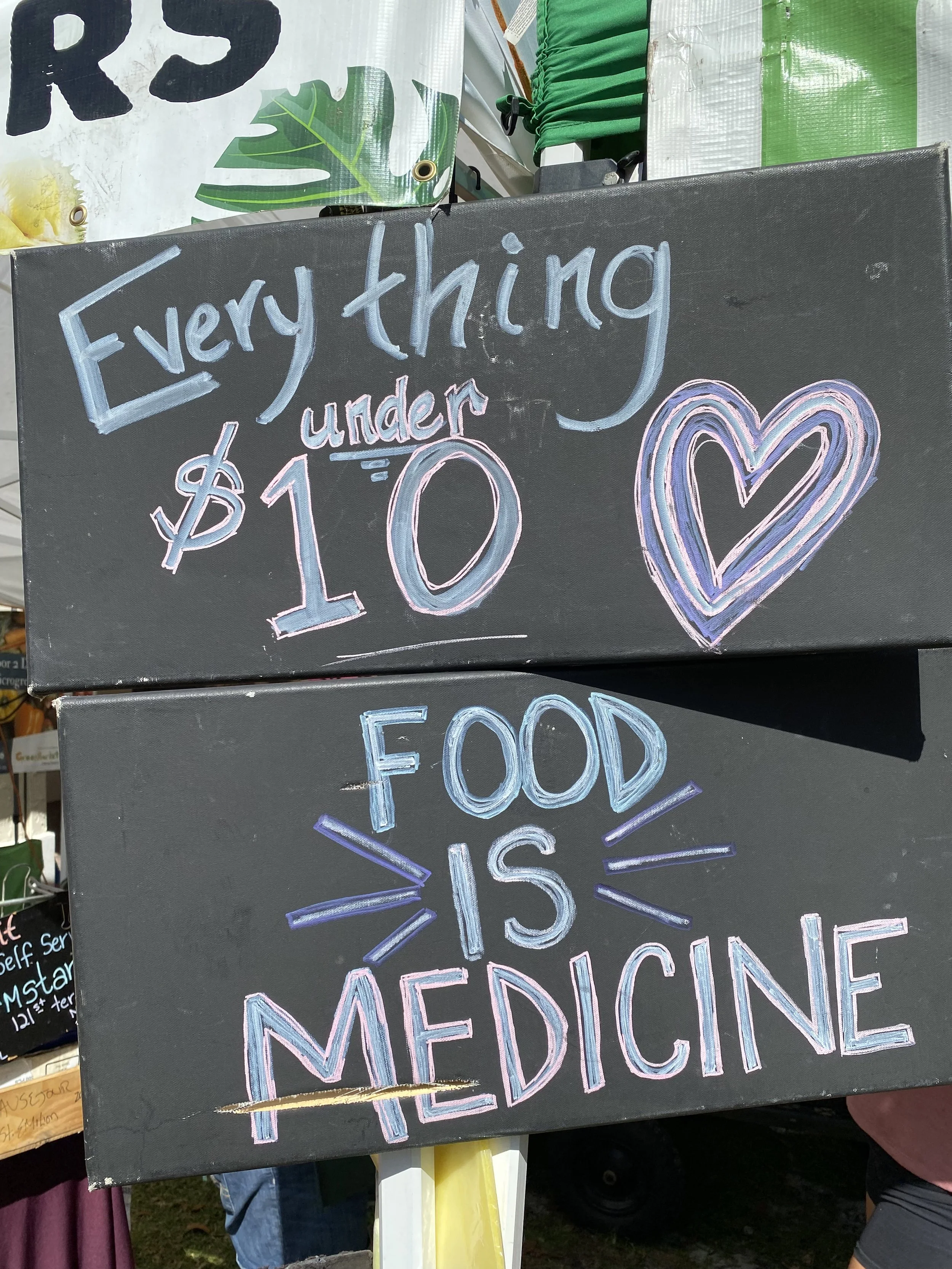
When I take time to visit the farmer’s market, I spend less than $100 and come home with enough sprouts, microgreens, and wheat grass to last the entire week.
SOURCES
Find simple ways to incorporate sprouts into your diet.
Make your own sprouts with a mason jar sprouting kit and/or sprouting bags. When you’re ready, read The Sprout Book by Doug Evans. You may be inspired to set up a sprouting station in your kitchen.
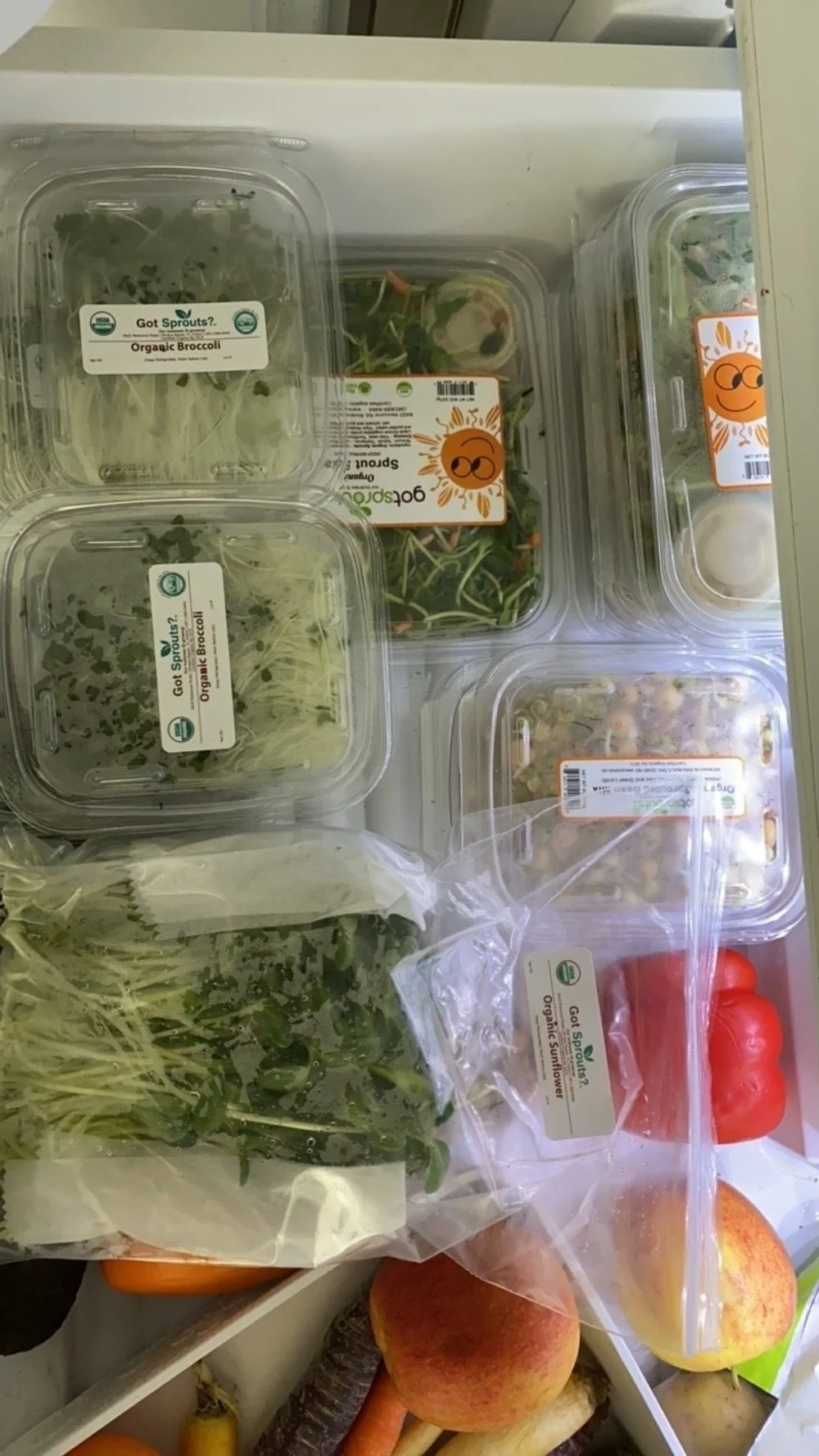
Purchase ready-made sprouts like broccoli, sunflower, and alfalfa sprouts at a local farmer’s market or in the produce section of your local grocery store.
Purchase from companies that provide home delivery, or ship sprouts.
Purchase sprouted nuts, grains, beans, and seeds online. Here are some examples:
examples
In addition to fresh sprouts (broccoli, sunflower, garbanzo bean, etc.), here are examples of sprouted foods I consume on a regular basis:
Sprouted dry cereal with raisins, almond milk, and topped with spices (cinnamon, ginger, nutmeg, and cloves).
Sprouted oatmeal (whole grain, not instant) cooked and topped with ground flaxseeds.
Sprouted whole grain toast with hummus.
Sprouted grains like brown rice with steamed vegetables.
Sprouted almonds as a snack.
Sprouted whole grain tortillas - bake on parchment paper in oven and fill with veggies.

Salads
Here are some of the different ways I prepare my daily salads:
Make a very large salad as my meal.
Pair a smaller salad with a bowl of vegetarian chili.
Make a large plate of raw vegetables with hummus.
Throw my salad in the blender and drink it as a vegetable smoothie.
BUILDING A SALAD
Start with greens and sprouts: Use a variety of lettuces and greens such as arugula, baby kale, butterhead, red leaf, romaine, and spinach, along with sprouts such as broccoli, radish, sunflower, chickpea, and mung bean.
Add raw vegetables: Beets, bell peppers, carrots, celery, chives, cucumbers, garlic, tomatoes, onions, parsley, peppers, radishes, squash, mushrooms, and more.
Add cooked vegetables: Asparagus, chopped baked sweet potato, sautéed mushrooms, or other cooked vegetables.
Add extras: Avocado, beans, berries, hemp seeds, nutritional yeast, nuts, quinoa, raisins, sauerkraut, and seasonal items such as red clover, calendula, or chicory flowers.
Add herbs and spices: Basil, mustard, oregano, pepper, turmeric, and others.
Finish with an oil-free dressing: Make a simple homemade dressing using ingredients such as dates, garlic, fresh lemon juice, tahini, and vinegar.

One of the easiest ways to enjoy salads every day is to prepare them ahead of time in mason jars. Gather 4–6 mason jars and plenty of your favorite salad ingredients, then layer them according to the picture above.
SALAD DRESSINGs
Here are three simple options for oil-free salad dressings. You can also use them on raw or steamed vegetables—and even potatoes!
vinegar
Balsamic vinegar or rice vinegar are both great options for dressing. You can also experiment with flavored vinegars, such as pomegranate, for a little variety.
creamy LEMON cashew Dressing
I use this delicious, creamy dressing on salads, but it’s so versatile! I also use it as a sour cream substitute on baked potatoes and Chipotle bowls, and even as an Alfredo-style sauce on red sauce pasta.
½ cup raw cashews
½ cup water
¼ cup fresh lemon juice
Blend in a high-speed blender until completely smooth and creamy. Add a little more water, 1 tablespoon at a time, if you want a thinner dressing.
For a larger batch, simply double it:
1 cup cashews + 1 cup water + ½ cup fresh lemon juice.
You can also add garlic, herbs, pepper, or a small amount of mustard for different variations.
Date Mustard Dressing
I learned how to make this dressing while doing a water-only fast with Dr. Frank Sabatino.
2 cups water
1 ¼ cups raw cashews or walnuts
6 Medjool dates, pitted (use more or less depending on desired sweetness)
½ cup stone ground mustard
¼ cup apple cider vinegar
Blend the nuts and water in a high-speed blender until smooth. Add the remaining ingredients and blend until creamy.
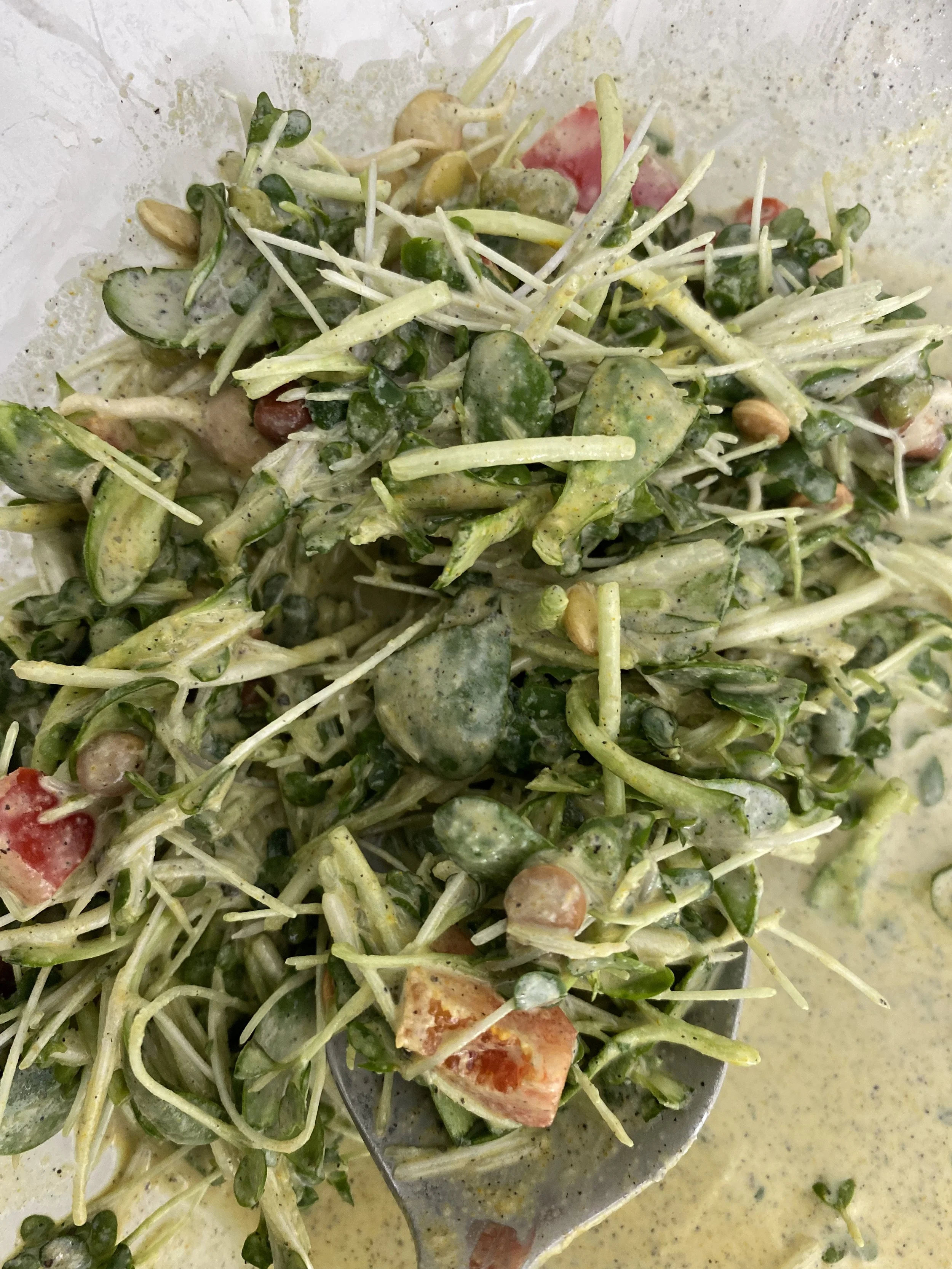
Sprout salad with creamy lemon cashew dressing. Yum!
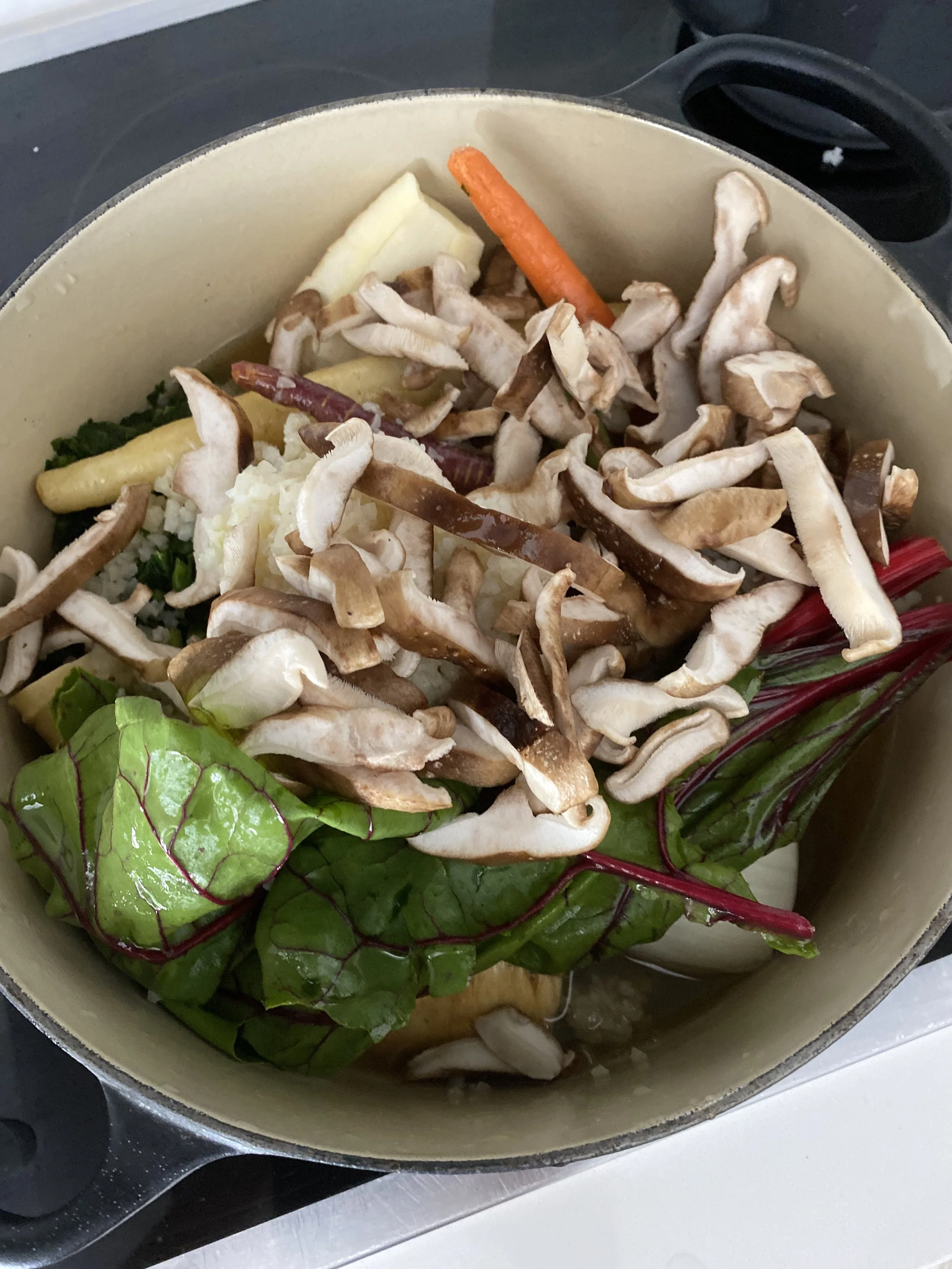
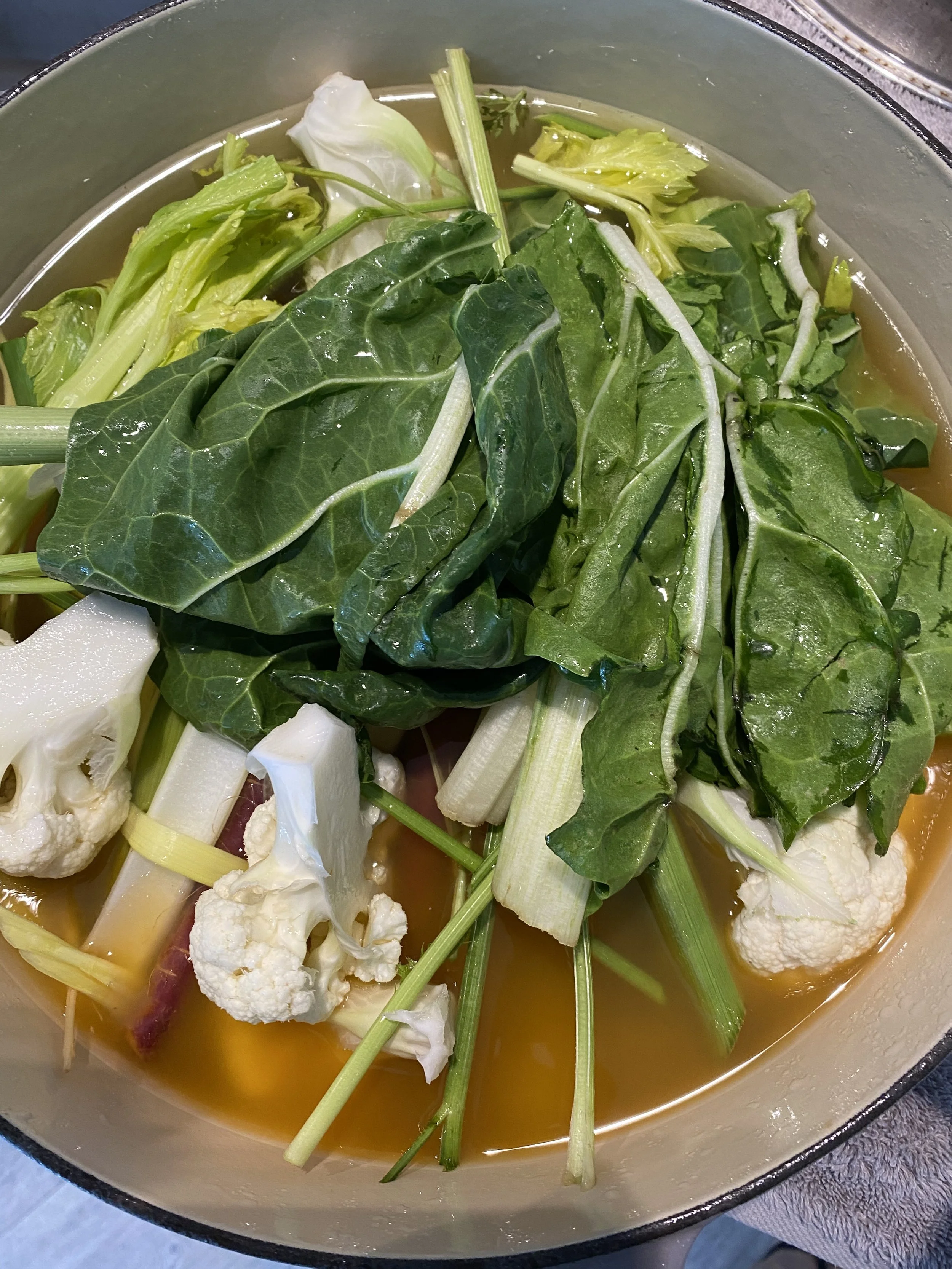
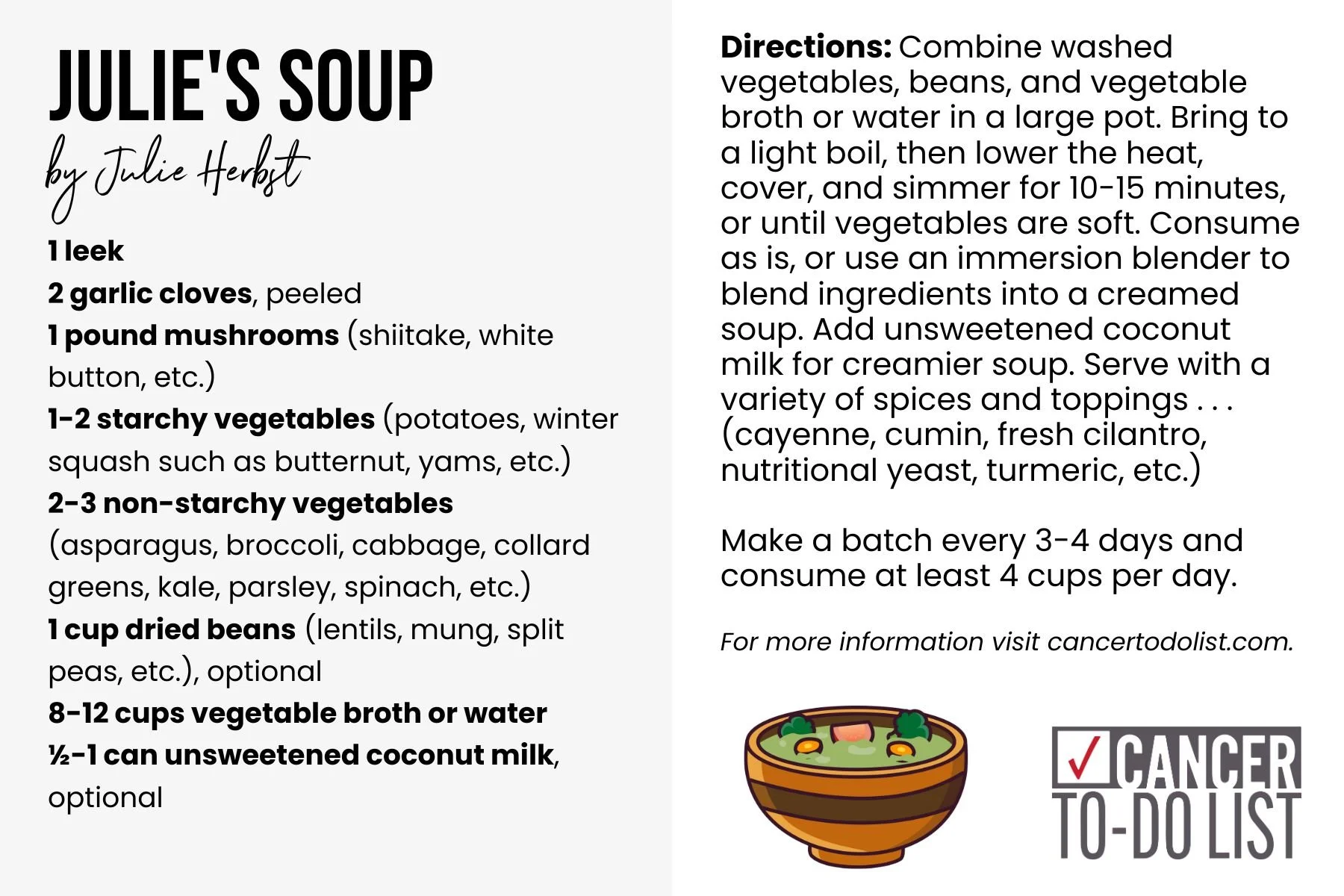
Julie’s Soup
1 leek
2 garlic cloves, peeled
1 pound mushrooms (shiitake, white button, etc.)
1-2 starchy vegetables (potatoes, winter squash such as acorn or butternut, yams, etc.)
2–3 non-starchy vegetables (asparagus, broccoli, cabbage, collard greens, kale, parsley, spinach, zucchini, etc.)
1 cup dried beans (lentils, mung beans, split peas, etc.), optional
8–12 cups vegetable broth or water
½–1 can unsweetened coconut milk, optional
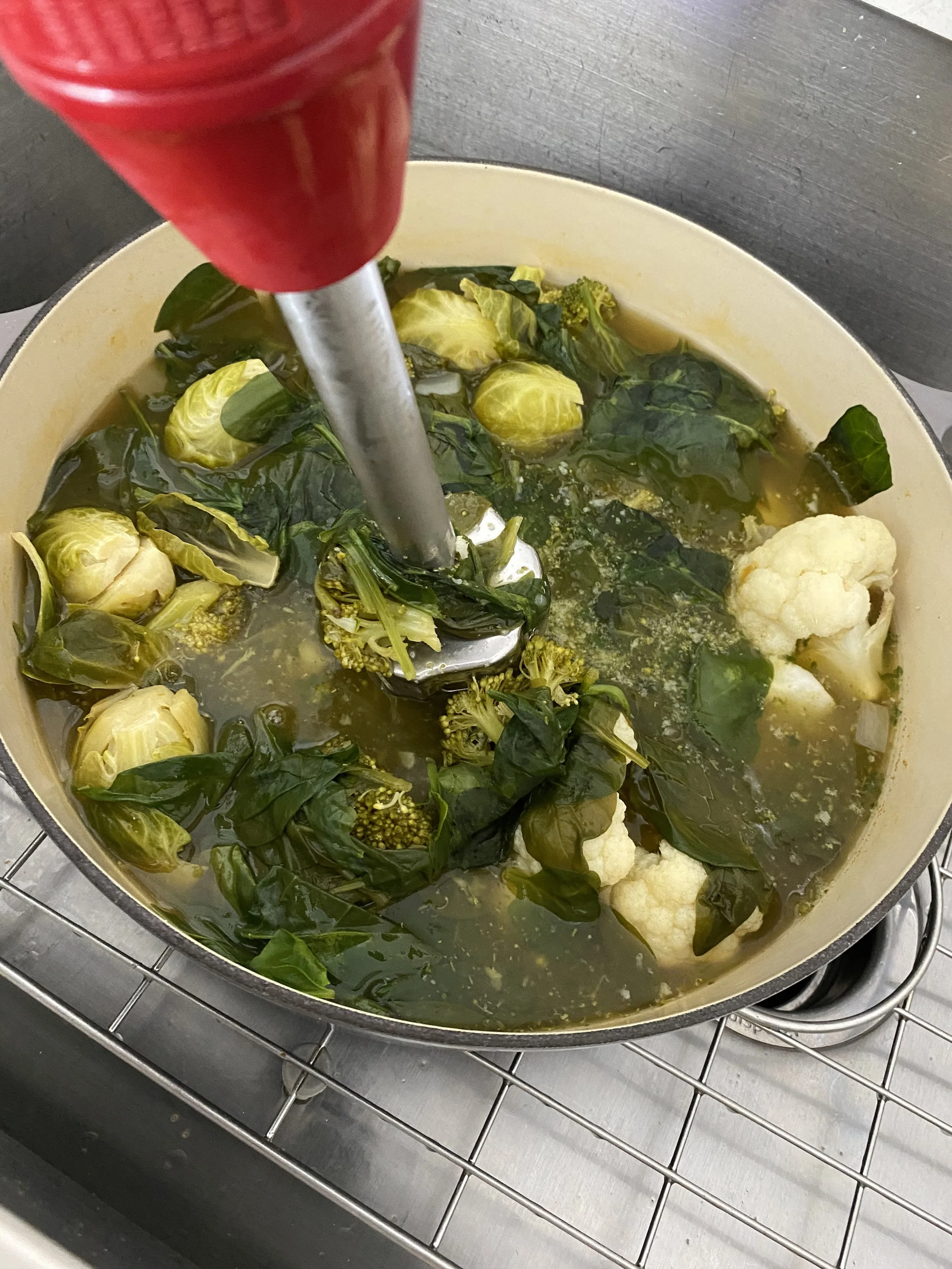
Combine the washed vegetables, beans, and vegetable broth or water in a large pot. Bring to a light boil, then reduce the heat, cover, and simmer until the vegetables and beans are soft. Enjoy as is, or use an immersion blender to create a creamy soup. Add unsweetened coconut milk for an even creamier consistency.
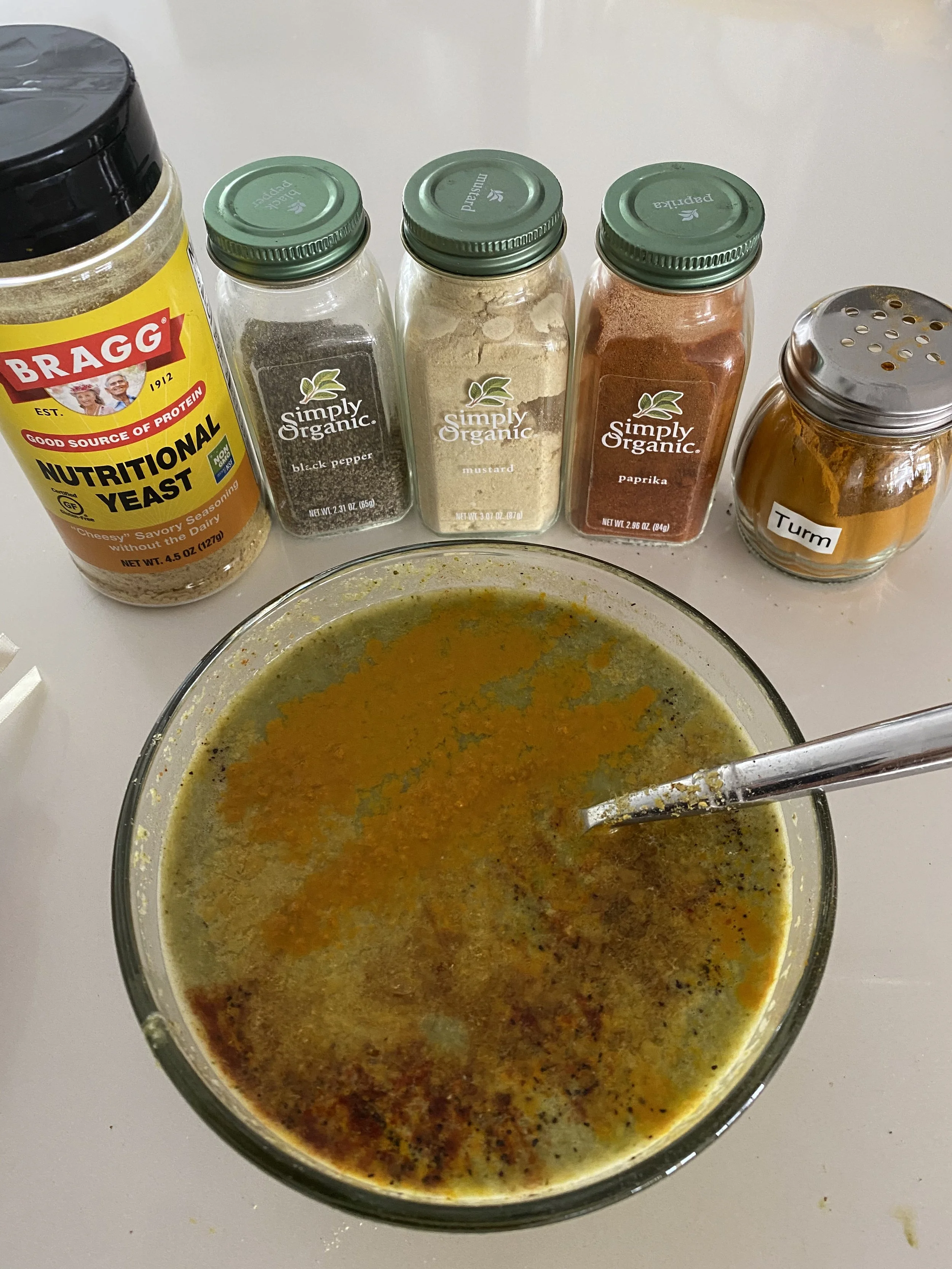
Serve with a variety of spices and toppings such as cayenne, cumin, fresh cilantro, nutritional yeast, paprika, turmeric, and more.
I make a batch of soup every 3–4 days and consume at least 4 cups per day.
Soups
LENTIL Soup
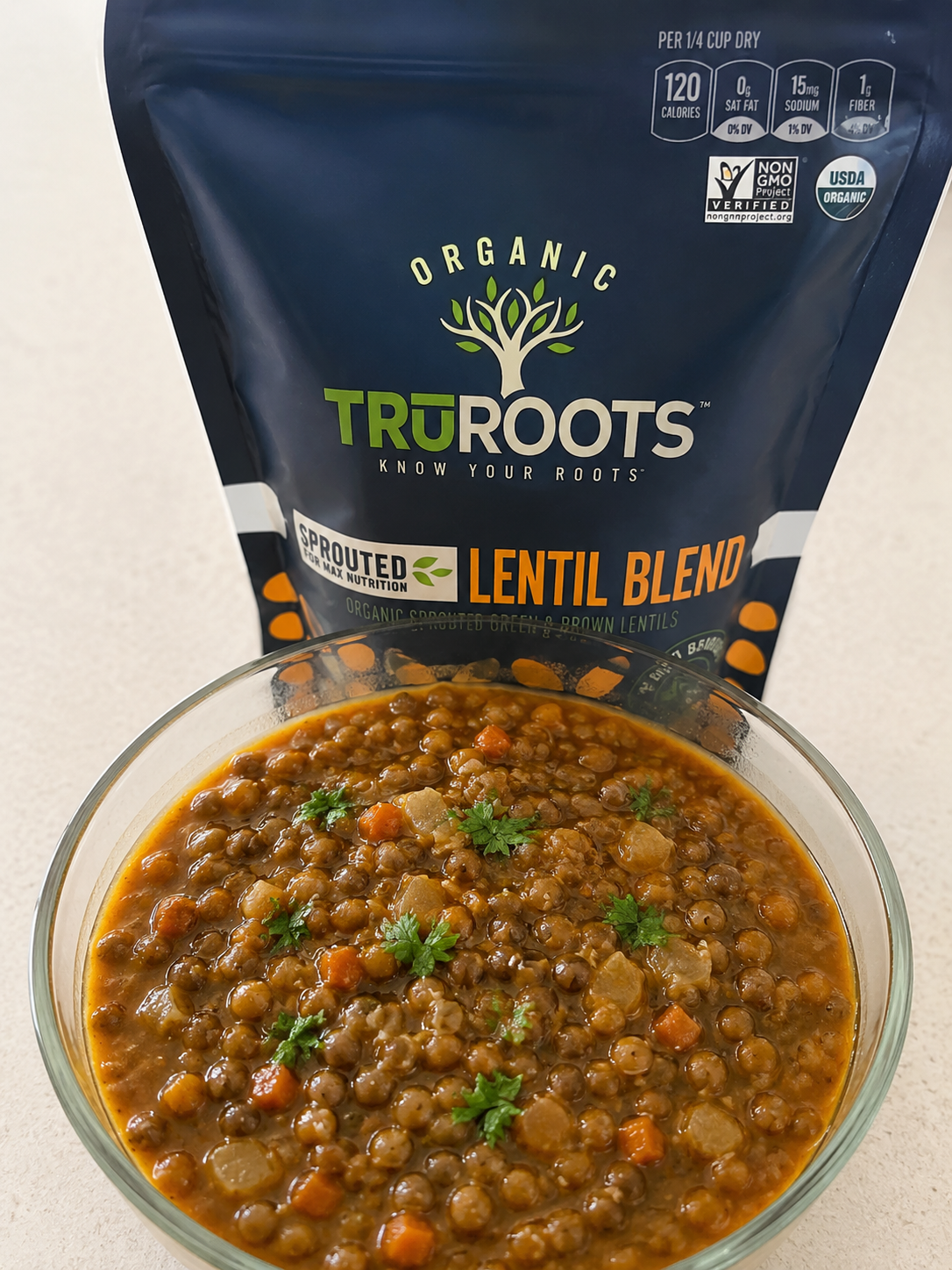
1 package (16 ounces) organic lentils, rinsed well
1 container (32 ounces) vegetable broth
1 small can tomato paste
4 garlic cloves, peeled and minced
2 cups water
Seasonings to taste (curry, pepper, cayenne pepper, etc.)
Combine all ingredients in a large pot. Bring to a boil, reduce the heat, and simmer for about an hour, or until the lentils are soft.
Serve over brown rice or on top of a baked potato.
Starches
Try to eat at least 1–2 servings of starches daily. You’ll get nutrients, fiber, carbohydrates, protein—and best of all, you’ll feel full!
Choose a grain: barley, buckwheat, farro, millet, oats, quinoa, rice (brown, red, wild, etc.), rye, sorghum, or wheat.
Choose a starchy vegetable: carrots, corn, Jerusalem artichokes, parsnips, plantains, potatoes, salsify, winter squash (acorn, banana, butternut, Hubbard), or yams.
Add beans or legumes: black beans, pinto beans, chickpeas, lentils, peas, etc. Add pumpkin seeds or walnuts to grains, salads, or soups as well.
BASIC IDEAS
Baked potato
Top a baked potato with steamed greens, mushrooms, guacamole, salsa, hummus, black beans, nutritional yeast, etc.
RICE & STEAMED VEGETABLES
Add 1 cup water and ½cup organic brown rice to a small rice cooker and press “cook.”
When the rice is almost done, add a huge handful of greens, such as spinach, on top and cover.
Within a few minutes, you’ll have delicious rice and steamed vegetables with very little effort.
SPAGHETTI SQUASH
Cut in half and bake at 350°F for about 1 hour, or until soft.
Scrape out the squash with a fork and top with spices or marinara sauce.
ROASTED ROOT VEGETABLES
Use parsnips, turnips, rutabaga, carrots, beets, etc.
Spread on a baking pan lined with parchment paper and drizzle with balsamic vinegar.
Bake at 450°F for about 30 minutes.
POTAFFLES (HEALTHY WAFFLE FRIES)
Bake Yukon Gold potatoes and allow them to cool.
Place one cooled potato at a time on a hot waffle iron and press down firmly, allowing the potato to brown.
Serve with applesauce or ketchup.
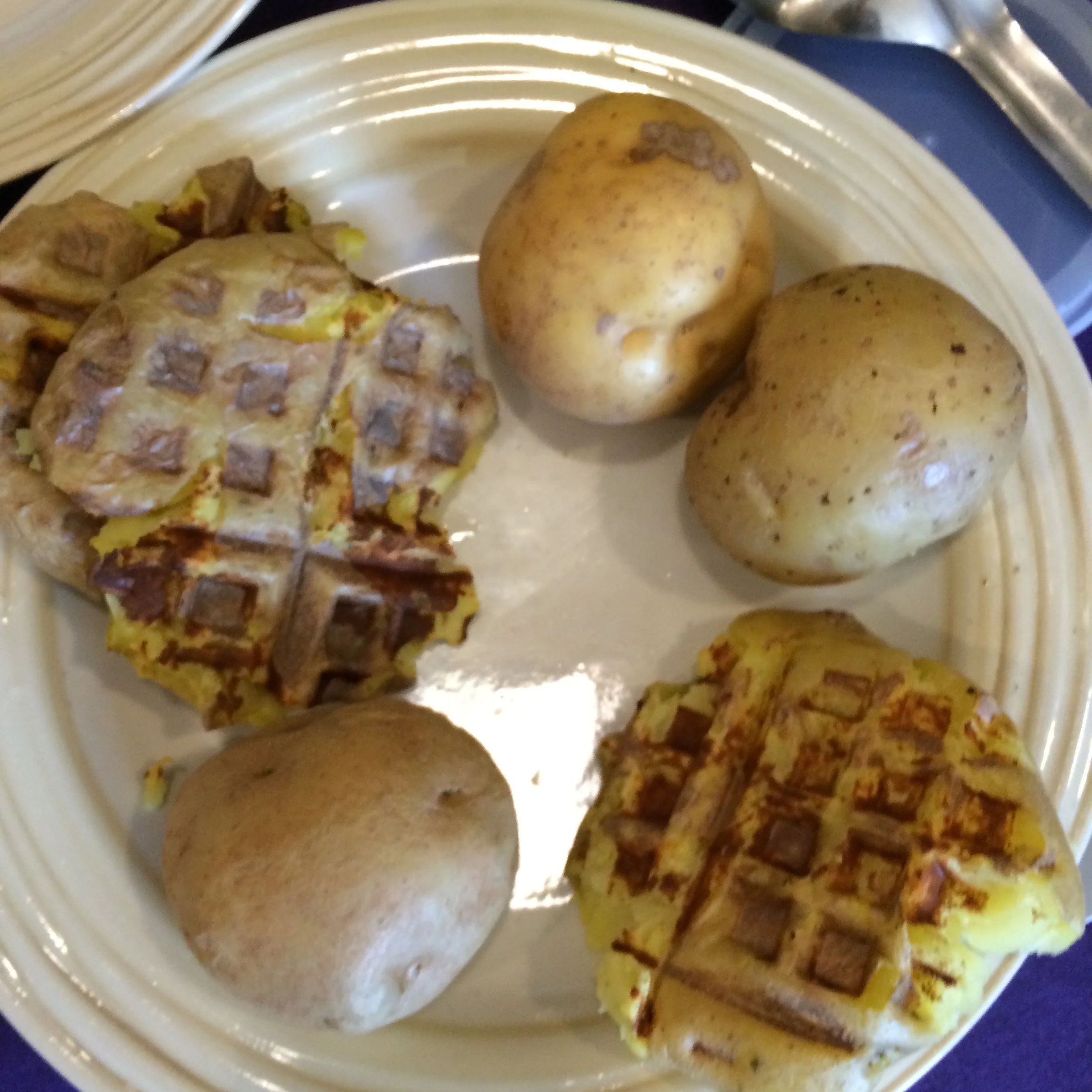
Potaffles are a fun, easy way to enjoy healthy potatoes. Try different varieties, like Yukon Gold potatoes mashed with roasted garlic or Hannah sweet potatoes with cinnamon.
OTHER STARCH RECIPEs
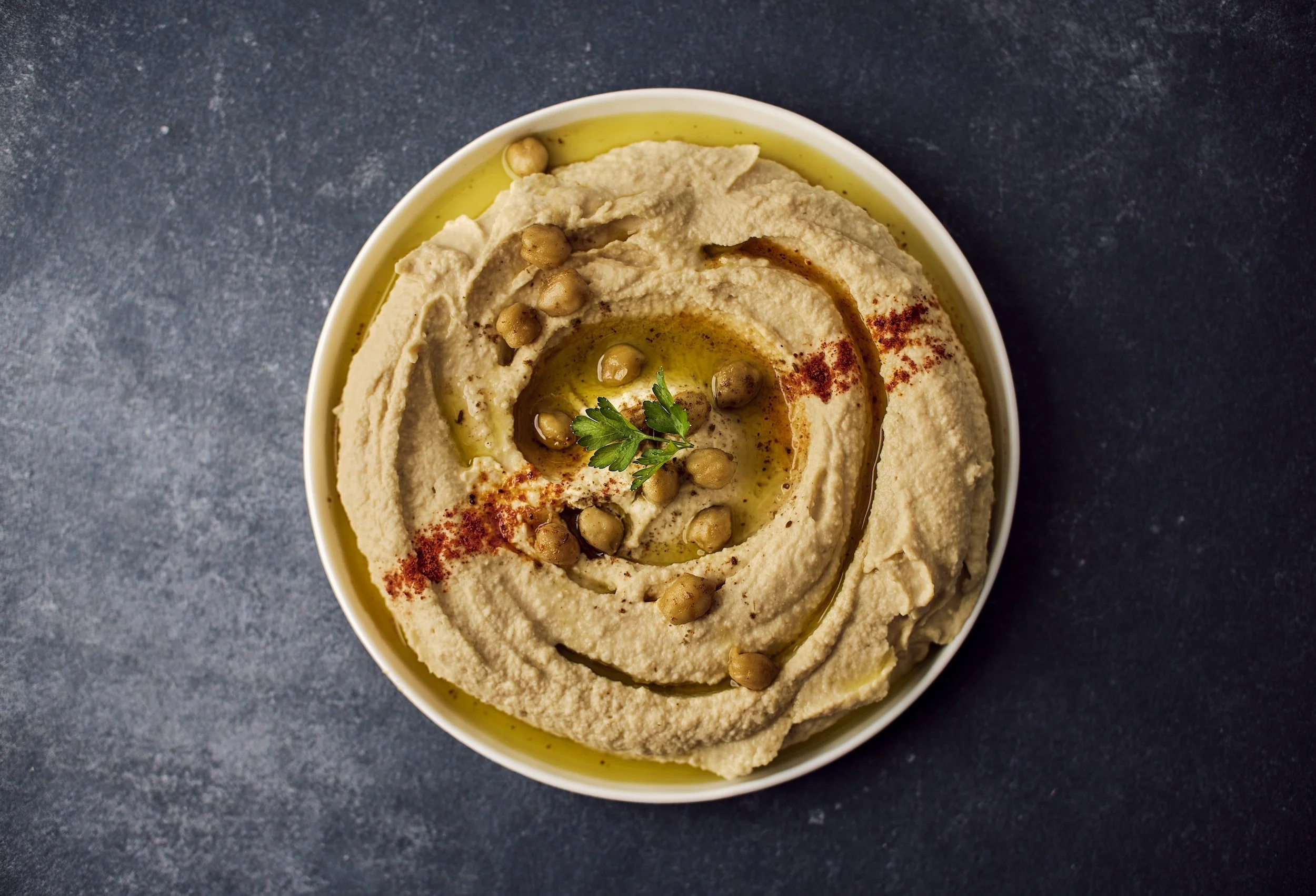
HUMMUS
1 can chickpeas, reserve liquid
1 squeeze fresh lemon juice
1 garlic clove, minced
1 teaspoon Bragg’s Liquid Aminos
Spices to taste: cumin, cayenne pepper, salt, pepper
Optional: ½ cup Creamy Lemon Cashew Dressing (I love adding this!)
Combine the following ingredients in a food processor and blend until smooth. If needed, add extra chickpea liquid to create your perfect consistency. Season to taste with any of the spice options. Serve with carrots, celery, or crackers.
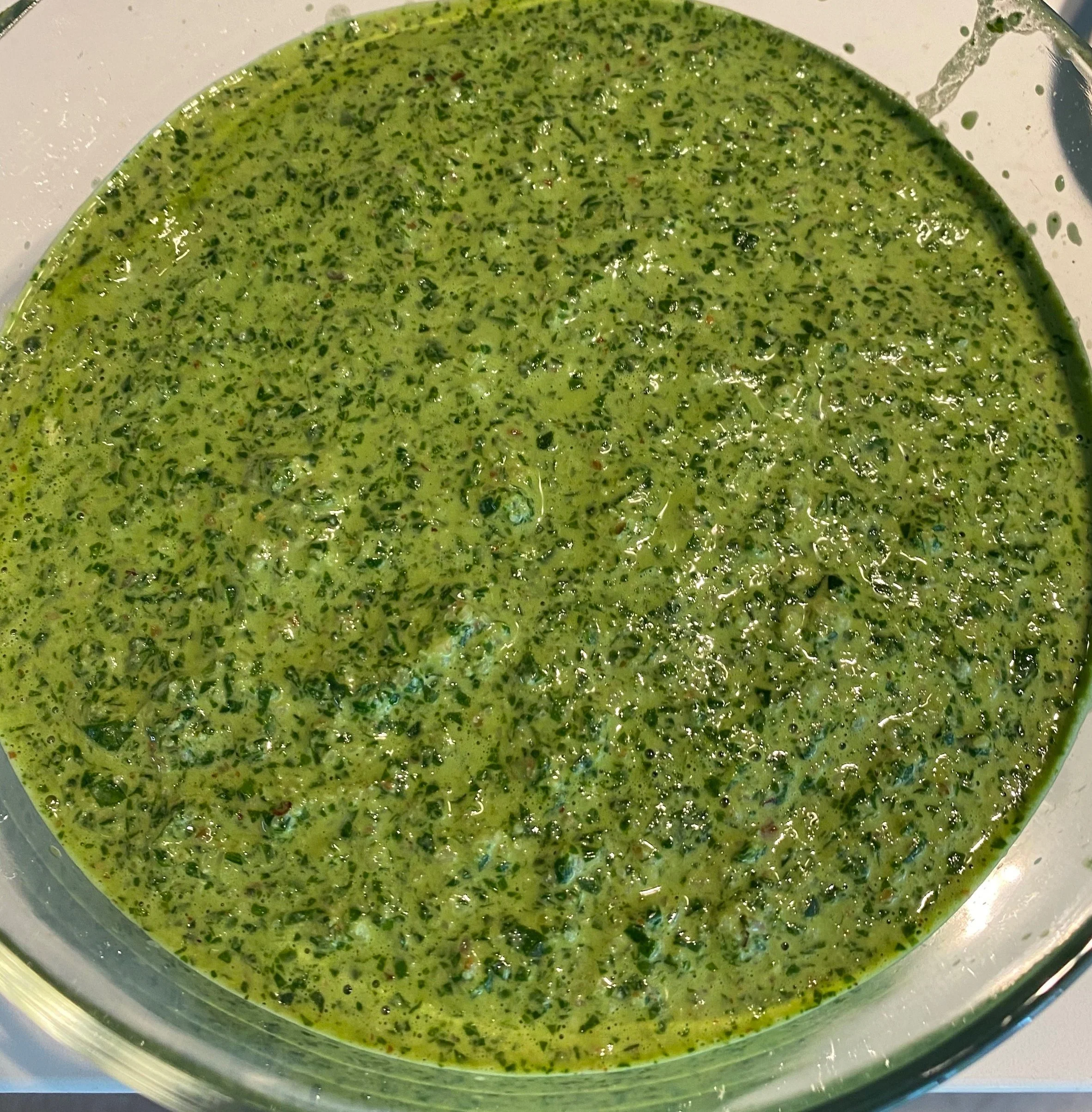
PASTA WITH VEGAN PESTO SAUCE
1 cup raw cashews
Juice of 2 lemons
3 large garlic cloves
¼ cup nutritional yeast
2 cups fresh basil
¼ cup hot water
Combine all ingredients in a food processor or high-speed blender and blend until smooth and creamy. Add a little more water as needed to reach your desired consistency.
Serve over whole grain brown rice or chickpea pasta with mushrooms or other vegetables.
This pesto is also delicious on vegetables, potatoes, and salads!
Note: Non-starchy plant foods such as bok choy, broccoli, Brussels sprouts, cabbage, cauliflower, melons, oranges, peaches, and many others are extremely important, but they cannot provide enough calories on their own to sustain a WFPB diet. They also won’t keep you satiated on their own.
Steamed Vegetables
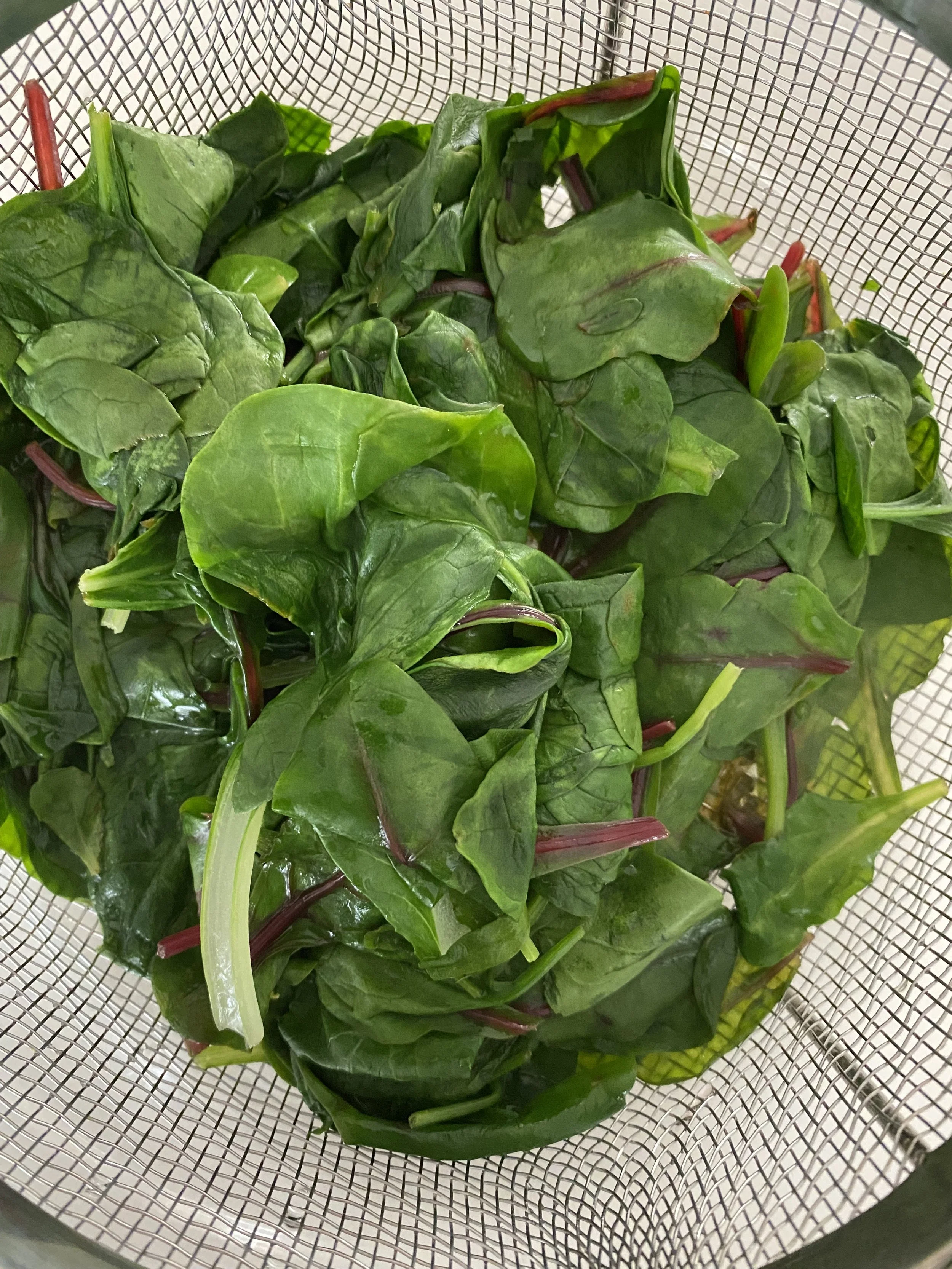
Get into the habit of eating steamed vegetables daily. Enjoy them at breakfast, lunch, dinner, as a snack, or added to another recipe, such as pasta.Choose 2-3 varieties such as asparagus, broccoli, collard greens, kale, spinach, Swiss chard, yellow squash, etc.
Choose 2–3 varieties, such as asparagus, broccoli, collard greens, kale, spinach, Swiss chard, or yellow squash.
Wash and cut or tear the vegetables into pieces, then place them in a steamer basket.
Bring water to a boil and steam for 3–6 minutes, or until desired tenderness.
Top with vinegar, an oil-free dressing, or freshly squeezed lemon or lime to add flavor and enhance nutrient absorption.
Spices And Herbs
Spices have been used for centuries for a variety of purposes, including as flavoring agents, colorants, and preservatives. Research has also explored how spices may help lower cancer risk and affect tumor behavior. https://www.ncbi.nlm.nih.gov/books/NBK92774/
Add a variety of spices and herbs to your foods. Use them fresh or dried—both have benefits. For example, cinnamon may help stabilize blood glucose, while combining turmeric with black pepper can significantly increase the absorption of curcumin. https://pubmed.ncbi.nlm.nih.gov/9619120/
I’m constantly exploring different herbs and spices to promote health and enhance the flavor of food. Here are some I use regularly.
HOW I USE SPICES & HERBS
Morning smoothie: all-purpose seasoning, cardamom, coriander, fennel seed, etc.
Cereal: pumpkin spice (cinnamon, ginger, nutmeg, and clove)
Salads: all-purpose seasoning, cayenne pepper, cumin, curry, oregano, and mustard
Soups: black pepper, crushed red pepper, paprika, and turmeric
Steamed vegetables: garlic powder, lemon pepper, onion powder, and sea salt
Potatoes & root vegetables: fresh rosemary, garlic powder, and dill
KEEP SPICES EASY TO USE
Organize your spices in a cabinet or drawer so they are easy to access and use every day. I also like to pre-mix a variety of my favorite spices in a mason jar so I can quickly add them to salads, soups, and other foods.
All-purpose seasoning (basil, black pepper, coriander, garlic, thyme, onion, oregano, parsley, sage etc.)
Pumpkin spice (cinnamon, ginger, nutmeg, and clove)
Sea salt - Atlantic sea salt or non-iodized salt. Here are 2 options: 1 or 2.
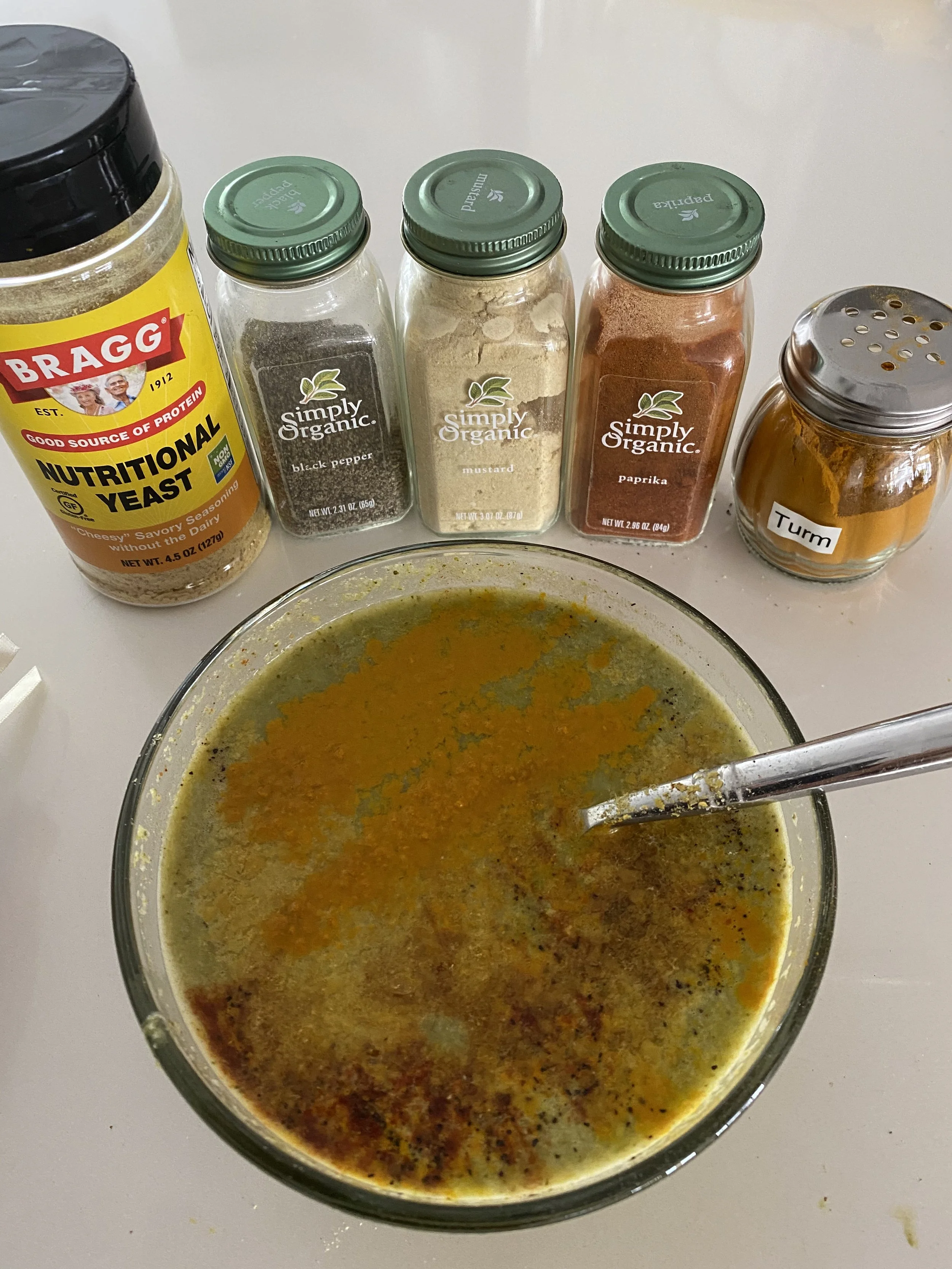
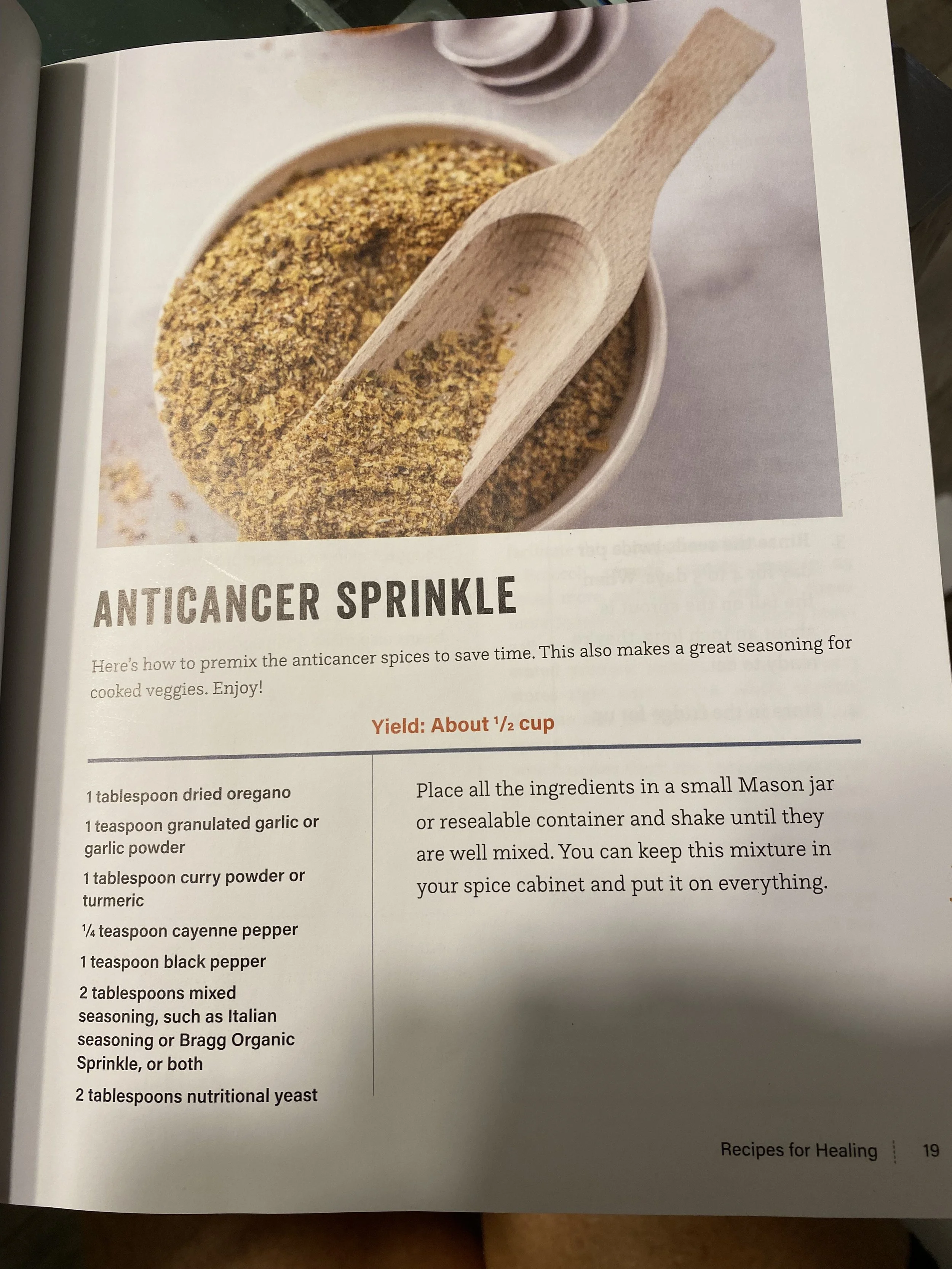
I love this idea from Chris Wark’s cookbook, Beat Cancer Kitchen. I keep a mason jar of mixed spices on the counter to use on soups, salads, etc.
Snacks
Here are just a few snack ideas, but as you experiment with food, you’ll discover your own favorites!
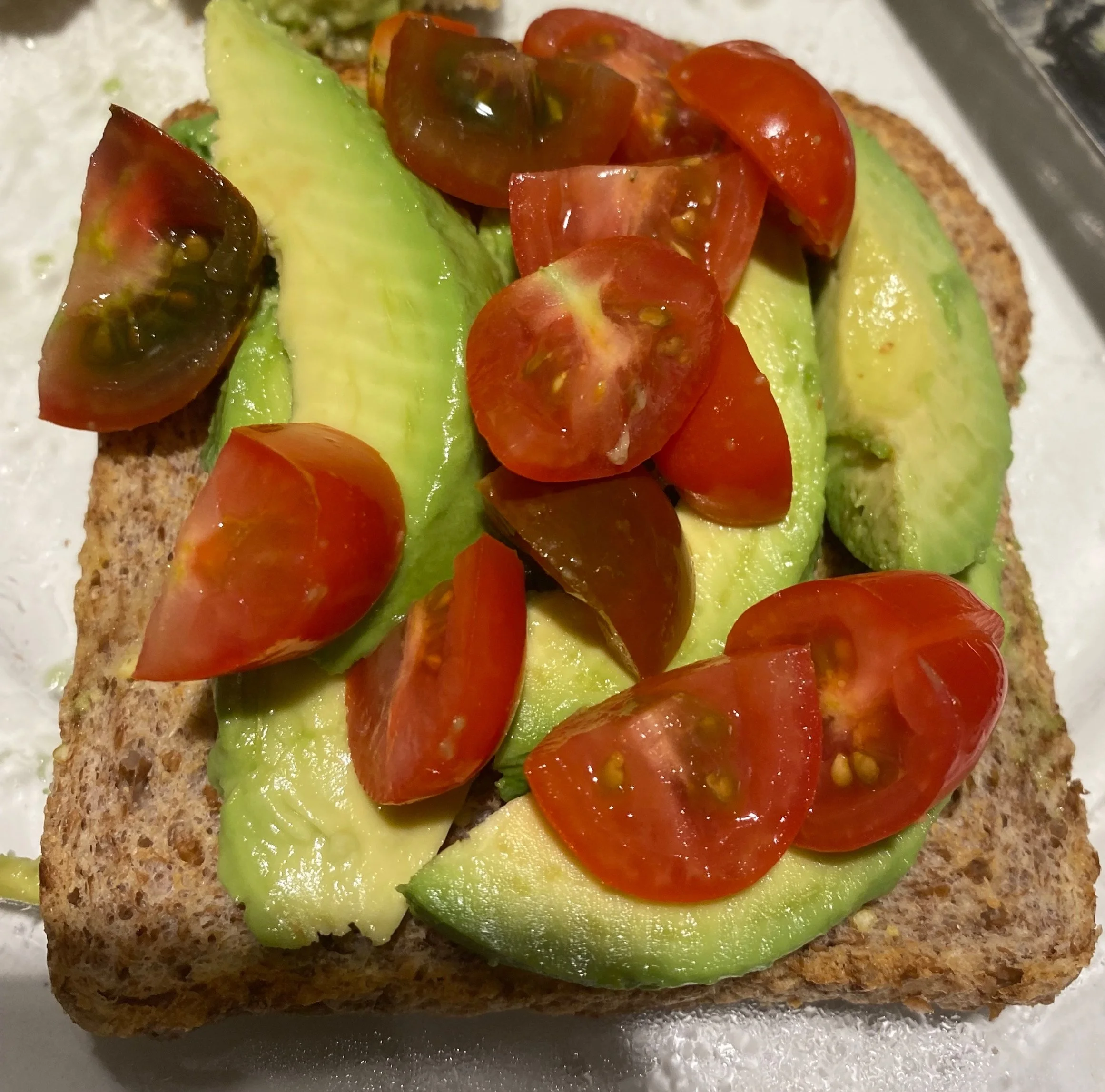
Avocado toast: toast topped with mashed avocado, tomato slices, nutritional yeast, salt, and pepper
Baked white or sweet potato topped with guacamole, onion, and tomatoes
Bowl Vegetarian chili with crackers
Celery with peanut butter
Green smoothie
Hummus with vegetables and crackers
Oatmeal with berries
Organic popcorn made in an air popper
On-the-go Snacks
Apple Apple slices, carrot sticks, celery sticks, and 3–4 walnuts
Baked sweet potatoes—eat them whole, like an apple!
A small amount of nuts—keep some in your purse, backpack, briefcase, or at work
Sweets
When I want something sweet, here are some of the things I reach for:
Apple with nut butter
Banana ice cream: Blend 1 cup almond milk, 1 frozen banana, and ice to desired thickness in a high-speed blender.
Fresh or frozen fruit: Apples, berries, cherries, grapes, melon, etc.
Coconut whipped cream, optional: Store a can of unsweetened coconut milk upside down in the refrigerator. Open the can, pour out the liquid, and whip the remaining coconut cream with a hand mixer until creamy.
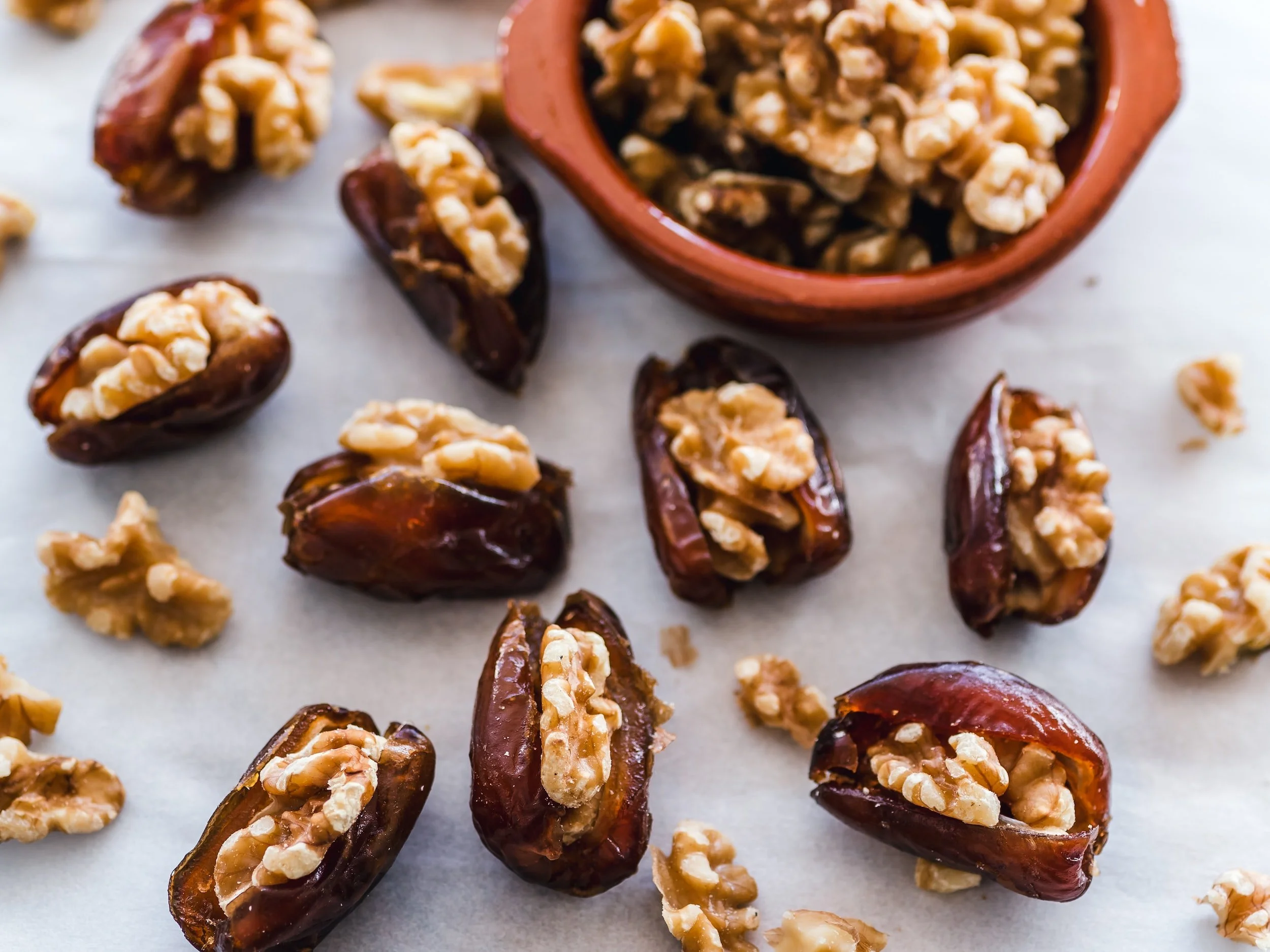
Medjool date filled with nut butter

RAW BROWNIES
I learned how to make these while doing a water-only fast with Dr. Frank Sabatino.
1 cup Medjool dates, pitted and soaked
1 cup rolled oats
1 cup peanut butter
¼ cup unsweetened cacao powder
Cover the dates with hot water and soak for 10 minutes. Drain, reserving the soaking water.
Process the oats in a food processor until finely ground. Add the dates, peanut butter, and cacao powder and process until well combined. If the mixture is too dry, add the reserved soaking water 1 tablespoon at a time until you reach the desired consistency.
Press firmly into an 8-inch square pan and refrigerate for about 1 hour, then cut into 16 squares.
Or keep it simple! Eat a spoonful at a time, or roll the mixture into balls and refrigerate or freeze.
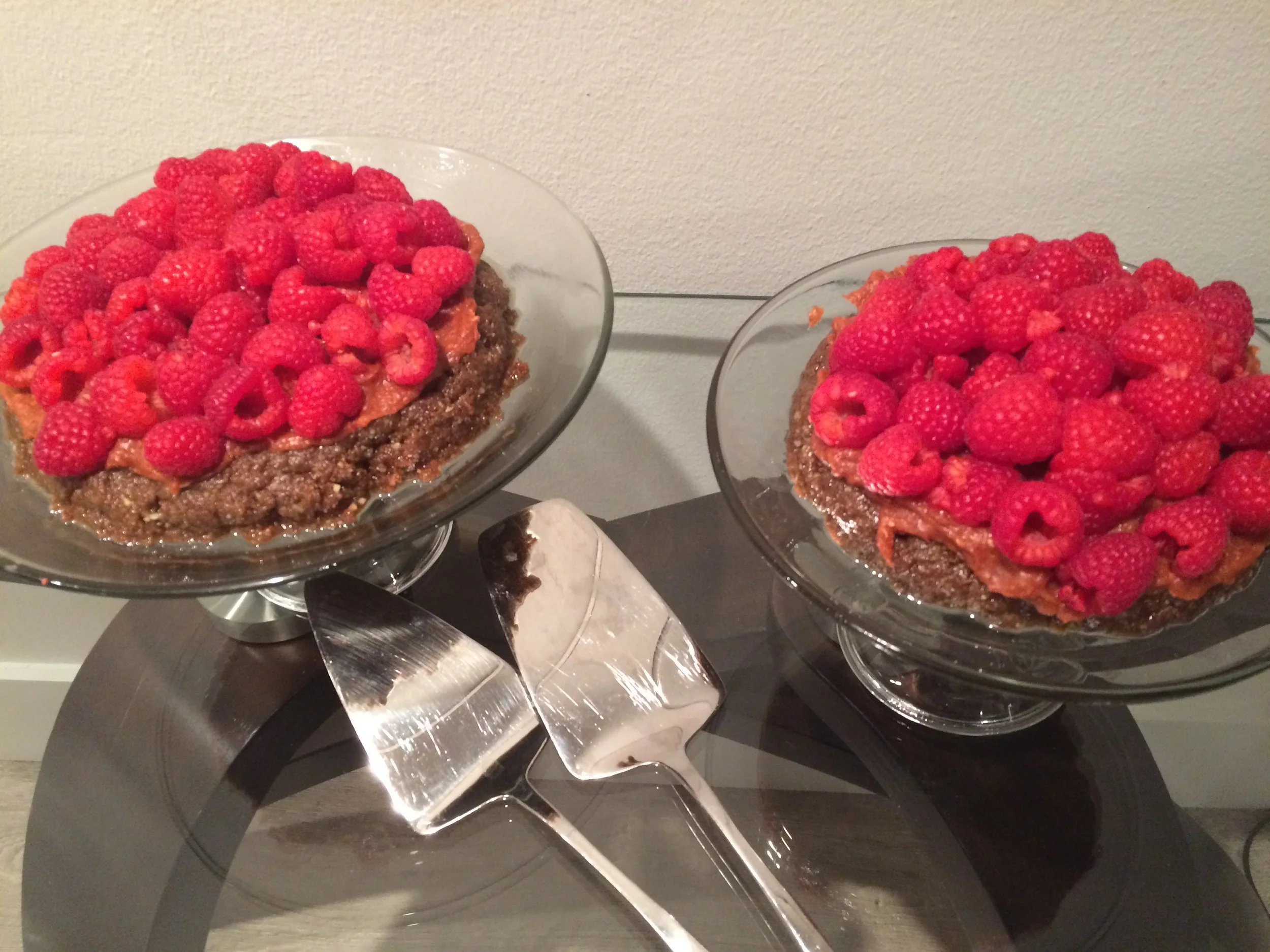
Raspberry Walnut Torte
I learned how to make this beautiful and delicious torte from a friend who is a breast cancer survivor.
2 cups raisins
2 cups walnuts
Frosting
1 cup Medjool dates, pitted
Juice of 1 lemon
Blend the raisins and walnuts in a food processor until well combined. Form the mixture into a circle on a large plate to create the torte base. Pour off any natural oil.
Blend the dates and lemon juice in a food processor until smooth, then spread over the torte base as frosting.
Garnish with fresh organic red raspberries. Beautiful and delicious!
Supplements
My cancer diagnosis gave us a reason to work with CAM doctors. We initially followed their extensive supplement protocol closely, but when the regimen left us feeling ill and nauseated, we reconsidered. Visit the CAM Treatment page to learn about our supplement journey.

Miracle Foods
I believe whole foods are miracles that God gave us, and research shows that these foods can make a difference in the prevention and treatment of cancer. I also believe we should eat a wide variety of plants we enjoy without stressing about eliminating certain foods. There is a great deal of misinformation telling us to avoid particular foods or food groups, yet there isn’t always solid long-term science to support these popular trends. I’ve learned to look at the body of research to guide my food choices.
I love the story in the Bible about Daniel and his friends choosing vegetables and water for ten days instead of the king’s food and wine:
“And in every matter of wisdom and understanding about which the king inquired of them, he found them ten times better than all the magicians and enchanters that were in all his kingdom.” — Daniel 1:20
After studying the significant relationship between nutrition and disease, my strongest advice is to eat a variety of plants every day. They contain different nutrients that positively affect the body—and may even be miraculous for you! I’ve tried all kinds of new plant foods since my diagnosis. All plants are helpful for the human body. Below are some specific foods I came across in my research.
BEANS and LEGUMES
Nutrient-dense carbohydrates and protein from beans and legumes can help reduce the risk of cancer. https://pubmed.ncbi.nlm.nih.gov/9786231/
Examples include black beans, black-eyed peas, fava beans, kidney beans, lima beans, mung beans, pinto beans, split peas, and more.
Rinse dry beans well before cooking to remove small rocks or other debris.
Soak dry beans before cooking to make them easier to digest. Some legumes, such as lentils and split peas, do not need to be soaked.
BERRIES
"Overwhelming evidence suggests that berries may have beneficial effects against several types of human cancers." https://pubmed.ncbi.nlm.nih.gov/18211019/
Blueberries may support immune function, including natural killer cell activity, and have been studied for their potential effects on breast and colon cancer cells.
Choose organic berries when possible, as conventionally grown berries can be among the produce with higher pesticide residues. Visit the EWG.org website.
BROCCOLI & BROCCOLI SPROUTS
Contain high levels of sulforaphane, an anticancer phytonutrient found particularly in cruciferous vegetables such as broccoli, bok choy, cabbage, cauliflower, and kale. Sulforaphane influences gene expression within cells and has been the subject of hundreds of anticancer studies.
Sulforaphane in broccoli and broccoli sprouts stimulates the production of detoxification enzymes, including glutathione transferases, which help protect cells from oxidative stress and toxins. https://pubmed.ncbi.nlm.nih.gov/21129940/
Broccoli sprouts are especially concentrated sources of these nutrients. Nutrition from one ounce of broccoli sprouts may be equivalent to one pound of mature broccoli. According to Dr. Will Bulsiewicz in Fiber Fueled,“Broccoli sprouts can produce 10 to 100 times more sulphoraphane than mature broccoli.”
CRUCIFEROUS VEGETABLES
Examples include broccoli and broccoli sprouts, bok choy, Brussels sprouts, cauliflower, cabbage, kale, and other leafy green vegetables.
Consuming cruciferous vegetables has been associated with higher survival rates, decreased overall mortality, and lower cancer recurrence. https://www.newswise.com/articles/cruciferous-vegetable-consumption-linked-to-improved-breast-cancer-survival-rateshttps://www.sciencedirect.com/science/article/abs/pii/S1877782121000412
Cruciferous vegetables contain phytonutrients such as sulforaphane, isothiocyanates, and I3C (indole-3-carbinol).
I3C affects estrogen metabolism and may be one reason cruciferous vegetables are associated with protection against breast cancer. I3C is released when the plant is cut, chewed, or lightly cooked. https://www.ncbi.nlm.nih.gov/pmc/articles/PMC2737735/
DIM (diindolylmethane) is a compound formed when I3C is broken down in the intestines.
I3C and DIM have been studied for their roles in detoxification and inhibition of carcinogens. https://pubmed.ncbi.nlm.nih.gov/15570059/ https://pubmed.ncbi.nlm.nih.gov/16681761/
FERMENTED FOODS
Eating fermented foods is a natural way to add diversity to your gut microbiome. Although research on fermented foods in humans is still developing, these foods may support gut health and other functions throughout the body.
You can make many fermented foods yourself. If you purchase them, check the label for live cultures.
Kombucha is a popular way to get probiotics. It can be expensive to buy, but inexpensive to make at home. Find a friend who makes kombucha and ask for a SCOBY starter, then follow instructions for making your own.
Here are some other fermented foods from Foodrevolution.org:
Kefir: A cultured probiotic food typically made with cow’s milk. To stay plant-based, choose coconut or water-based varieties. https://foodrevolution.org/blog/problems-with-dairy/
Kimchi: A traditional Korean fermented food made with cabbage and other vegetables.
Miso: A fermented paste commonly used in Japanese soups and other dishes. It can be high in sodium, so use in moderation.
Natto: A traditional Japanese food made from fermented soybeans and rich in probiotics.
Pickled vegetables: Cucumbers and other vegetables can provide probiotics when naturally fermented and unpasteurized. They can also be high in sodium, so use in moderation.
Sauerkraut: Fermented cabbage containing naturally occurring probiotics. Look for fresh, unpasteurized varieties with live cultures.
Tempeh: A fermented soybean food that provides both protein and probiotics.
Yogurt: Choose unsweetened, non-dairy varieties with live cultures to keep it plant-based.
If you don’t like fermented foods, you don’t have to eat them to be healthy. Fermented plant foods can contribute to a healthy gut, just as other plant foods do.
If you enjoy fermented foods, keep in mind that there can be some downsides. Certain fermented foods may pose a risk of contamination, particularly during pregnancy or cancer treatment, and some, such as kombucha, may contain small amounts of alcohol.
FLAXSEED
A natural source of omega-3 fatty acids and rich in lignans, protective plant compounds.
Lignans are phytoestrogens that may help moderate the effects of the body’s own estrogen. https://pubmed.ncbi.nlm.nih.gov/12968067/https://pubmed.ncbi.nlm.nih.gov/3017606/
FRUIT
Fruit is an overarching category that includes several other foods on this list, but I had to include it because fruits do so many things for the body. The peel or skin provides certain nutrients, while the inside provides others. Our bodies benefit from the wide variety of nutrients found in apples, cherries, cranberries, grapefruit, lemons, limes, oranges, pineapples, and so many more.
I also included fruit because I’ve heard of many cancer patients avoiding it for fear that the sugar will cause cancer to grow. However, research supports the relationship between higher fruit and vegetable consumption and a reduced risk of cancer. Colorful fruits, such as berries, have also been widely studied. https://pubmed.ncbi.nlm.nih.gov/1764568/
Some fruits are higher in sugar, so I eat them in the morning and aim to eat more vegetables than fruit throughout the day.
GARLIC
Population studies have associated garlic intake with a lower risk of certain cancers. In one study, consuming garlic at least once per week was associated with a 35–50% lower risk of some cancers. https://pubmed.ncbi.nlm.nih.gov/24716172/https://pubmed.ncbi.nlm.nih.gov/8296768/ https://www.herbalgram.org/resources/expanded-commission-e/garlic/
Try to eat two garlic cloves per day. After chopping or crushing garlic, let it sit for about 10 minutes before cooking or eating to allow beneficial compounds to develop.
GINGER ROOT
Ginger has been studied for its inhibitory effects on various cancer cell types. https://pubmed.ncbi.nlm.nih.gov/24552266/
It may also help alleviate nausea associated with cancer treatment.
GREEN TEA
Green tea contains powerful plant compounds called catechins, which have strong antioxidant properties and help protect healthy cells from oxidative damage.
The most abundant catechin in green tea is EGCG (epigallocatechin gallate).
Studies suggest that EGCG helps fight free radicals and may inhibit angiogenesis, the formation of new blood vessels that tumors need to grow.
Green tea and its compounds have been extensively studied for their potential anticancer effects.
I use an edible form of organic green tea leaves and add them directly to my morning smoothie.
MUSHROOMS
Mushrooms have been used in Asia and traditional Chinese medicine (TCM) for thousands of years.
“An accumulating body of evidence suggests that consumption of dietary mushrooms can protect against breast cancer.” https://pubmed.ncbi.nlm.nih.gov/20921274/
According to Dr. Will Bulsiewicz in Fiber Fueled, "Mushrooms are fungi and eating one button mushroom per day is associated with a 64% reduction in breast cancer risk."
Medicinal mushrooms have been used to support immune function in patients undergoing chemotherapy and radiation. https://pubmed.ncbi.nlm.nih.gov/16117607/ https://pubmed.ncbi.nlm.nih.gov/29872510/
Mushrooms contain ellagic acid, among other powerful ingredients.
There are many kinds, like turkey tail (PSK), reishi (ganoderma lucidum), chaga, maitake, and shitake. https://www.cancer.gov/search/results?swKeyword=mushrooms
Agaricus Blazei Murrill Mushroom - a medicinal mushroom that is cultivated in Brazil and used in Japan for many ailments, including cancer. https://www.mskcc.org/cancer-care/integrative-medicine/herbs/agaricus
Chaga Mushrooms - a medicinal mushroom that has anti-cancer capabilities. https://www.ncbi.nlm.nih.gov/pmc/articles/PMC4946216/
Cordyceps Sinensis Mushrooms - a medicinal mushroom that was shown to have anti-cancer effects in lab mice. https://pubmed.ncbi.nlm.nih.gov/29253616/
Maitake D Fraction Mushrooms - can arrest the progression of cancer through stimulation of natural killer (NK) cell activity. https://pubmed.ncbi.nlm.nih.gov/14977447/
Polysaccharide-K (PSK) - a medical mushroom extract that is one of the best-selling cancer drugs in Japan and throughout Europe. https://pubmed.ncbi.nlm.nih.gov/22204346/
NUTS
Just a small handful of nuts per day can be beneficial for cancer. https://pubmed.ncbi.nlm.nih.gov/15099940/
Higher nut consumption may be associated with a reduced risk of cancer recurrence and death in patients with advanced colon cancer. https://pubmed.ncbi.nlm.nih.gov/29489429/
Nuts are high in fat, so I use them more like a condiment, such as sprinkling them on top of a salad.
Nut butters can add a significant amount of fat to the diet, so use them sparingly.
ONIONS
Onions contain plant compounds that have been studied for their potential anticancer properties. https://pubmed.ncbi.nlm.nih.gov/17093154/
Examples include leeks, scallions, and red, white, and yellow onions.
PARSLEY
Eat the garnish! Parsley often decorates the plate, but it has so many more benefits.
Parsley contains plant compounds such as apigenin, which has been studied for its potential anticancer properties. https://pubmed.ncbi.nlm.nih.gov/29034071/
ROOT VEGETABLES
Root vegetables are rich in carotenoids, an organic pigment whose anti-cancer effects were proven by Helmut Sies, M.D., an NFCR-funded scientist for over 30 years. https://www.nfcr.org/blog/root-vegetables-and-exotic-fruits-month-superfoods/
Examples include beets, carrots, Jerusalem artichokes, jicama, parsnips, rutabaga, sweet potatoes, turnips, and yams.
SEAWEED AND SEA VEGETABLES
Seaweed and sea vegetables are a good source of iodine and other nutrients.
Dulse flakes (2 tablespoons) per week can be a great source of iodine.
Brown seaweeds include kelp, ficus, hijiki, and sargassum.
Red seaweeds include dulse, nori, Irish Moss, and gracillaria. https://www.cambridge.org/core/journals/british-journal-of-nutrition/article/casecontrol-study-on-seaweed-consumption-and-the-risk-of-breast-cancer/CBAD384D566CAA4433F4270CBA221919
SEEDS
Seeds such as chia, flax, hemp, sesame, and sunflower are rich in omega-3 fats, fiber, and lignans. https://www.sciencedirect.com/science/article/abs/pii/S0308814605006801
Milk thistle is a plant traditionally associated with liver support and has also been studied in small groups of cancer patients.
Milk thistle seeds seeds can be ground and added to smoothies, salads, and other foods.
SOY
Soy has long been part of many Asian cultures, which have some of the lowest rates of cancer in the world. Soy is rich in flavonoids, which protect against heart disease and breast cancer. People, including those with estrogen receptor-positive breast cancer, can safely consume whole soy foods, such as edamame, and minimally processed soy foods, such as tofu, tempeh, soy milk, and dry-roasted soy nuts. Soy protein isolates can also be safe when minimally processed—look for water-washed, solvent-free products processed at low temperatures. This helps preserve more of the natural “co-nutrients” and avoids residual solvents such as ethanol. Watch out for highly processed soy products with added fat, salt, and sugar. Soy chips, soy hot dogs, soy meats, and similar products can be just as unhealthy as other junk foods.
Confusion about soy arises from the term “phytoestrogens.” Phytoestrogens are compounds that naturally occur in many plants like carrots, celery, garlic, potatoes, rice, wheat, and soy. Soybeans contain a class of naturally-occurring phytoestrogens, called isoflavones. The confusion comes from the fact that isoflavones have chemical structures that look a little like estrogen found in a woman’s body, yet isoflavones have antiestrogen properties that can block natural estrogens from forming, basically acting like a natural hormone blocker. https://www.oncologynutrition.org/erfc/healthy-nutrition-now/foods/soy-and-breast-cancer
Genistein, an isoflavone found in soy, has 2,789 anti-cancer studies. These human studies have involved thousands of women in both Asia and the United States who were followed for many years, and consistent results show that women who eat soy have lower rates of breast cancer risk and lower rates of recurrence of breast cancer.
Here are some publications showing the positive impact of soy foods on the development of breast cancer, as well as the recurrence:
Whole soy foods, like soybeans and tofu, protect against hormone-driven cancers by attaching these weak plant estrogens to receptor sites on cancer cells, effectively blocking the cells from being activated by strong estrogens. Soy phytoestrogens actually act as estrogen-blockers “. . . it appears that soy isoflavones do not function as an estrogen, but rather exhibit anti-estrogenic properties . . . soy isoflavones should be considered a potential anti-cancer therapeutic agent in hormone receptor positive breast cancer.” https://pubmed.ncbi.nlm.nih.gov/23919747/
Soy isoflavone consumption is associated with an 11 percent overall reduction in breast cancer incidence. There was also a 16 percent reduction in breast cancer recurrence. https://link.springer.com/article/10.1007/s10549-010-1270-8https://europepmc.org/article/MED/21113655https://www.ncbi.nlm.nih.gov/pmc/articles/PMC4463727/
Asian women who consume more soy have an approximate 30 percent reduction in risk of developing breast cancer. https://pubmed.ncbi.nlm.nih.gov/27161216/
Population studies do not link consuming soy with any cancer. In fact, evidence continues to grow showing that eating traditional soy foods may actually lower the risk of breast, prostate, and endometrial cancer. https://www.oncolink.org/support/nutrition-and-cancer/during-and-after-treatment/soy-and-breast-cancer
The longer you are exposed to soy, the better. Four out of four epidemiological studies that looked at early exposure to soy showed that consumption of soy by adolescents resulted in a 50 percent reduction in risk of breast cancer. https://pubmed.ncbi.nlm.nih.gov/11352858/https://pubmed.ncbi.nlm.nih.gov/19211822/
Much of the negative research on soy has been funded by competitors of plant-based milks. The Weston A. Price Foundation promotes the consumption of raw meats and dairy, yet many of the references in its anti-soy articles actually support the benefits of soy. Another source of negative research comes from University of Illinois researcher Dr. Helferich, who studied the effects of soy isoflavones using athymic mice, which are bred without a functioning immune system. These mice were given large quantities of isolated isoflavones, and some studies showed increased tumor growth. However, these animal models and conditions differ significantly from consuming whole soy foods in humans.
SPIRULINA
Derived from blue-green algae (Spirulina platensis) that grows abundantly in water.
Spirulina has antioxidant, anti-inflammatory, and anti-cancer properties.” https://pubmed.ncbi.nlm.nih.gov/12448336/
It is a rich source of protein, amino acids, and vitamins.
Spirulina also provides minerals, including potassium, sodium, calcium, magnesium, iron, and zinc.
Spirulina has also been studied for its effect on the absorption of trace minerals such as selenium and molybdenum.
SPROUTS (SEE section ABOVE)
TOMATOES
Tomatoes may help reduce the risk of several cancers.
They are a major source of lycopene, a carotenoid responsible for their red pigment. https://www.aicr.org/cancer-prevention/food-facts/tomatoes/
TURMERIC ROOT
Turmeric is a spice native to India and Indonesia.
One of turmeric’s active compounds is curcumin.
Curcumin has been studied for its anti-inflammatory and antioxidant properties and its potential role in several cancers, including breast, lung, stomach, liver, and colon cancer. https://pubmed.ncbi.nlm.nih.gov/25665066/
VEGETABLES
Vegetables are an overarching category that includes several other foods on this list, but I had to include them because vegetables do so many things for the body. The peel or skin provides certain nutrients, while the inside provides others. Our bodies benefit from the wide variety of nutrients found in asparagus, beets, carrots, celery, cilantro, mustard greens, and the list goes on and on.
One study found that people eating the most vegetables had a 15% lower risk of all-cause mortality. Please pass the veggies! https://www.ncbi.nlm.nih.gov/pmc/articles/PMC4191896/
WHEATGRASS
Rich in antioxidants which help combat oxidative stress.
Rich in chlorophyll, which is one of nature's greatest healers.
If you juice sprouts like wheatgrass, be sure to fold a small bunch in half and feed the bent section into the juicer.
My Experience: I drank wheatgrass on and off for the first three years after my diagnosis, but in year four, I started consistently juicing wheat grass several times per week.
Food Tips
Almond milk: Blend almond butter with water in a high-speed blender.
Animal food replacements: Try avocado, hummus, nut butters, portobello mushrooms, seitan (wheat gluten), or veggie burgers.
Use avocado like butter on toast or baked potatoes.
Tortillas: Bake them in the oven rather than eating them fried.
Oil-free toppings: Use balsamic vinegar or apple cider vinegar on salads and other foods.
Cleaning produce: Soak produce in baking soda and water for 10 minutes (1 teaspoon baking soda per 16 ounces water).
Date paste: Use instead of honey.
Parmesan substitute: Combine dulse flakes and nutritional yeast.
Egg substitute: Mix 1 tablespoon chia seeds or ground flaxseeds with 3 tablespoons water. Let sit for 10 minutes to thicken.
Hemp seeds: Add to salads or vegetables for a cheesy flavor.
Herbs: Add fresh, chopped herbs to mashed potatoes or rice.
Lemon & lime: Squeeze fresh lemon or lime over greens.
Medjool dates: Use as a sweetener in recipes or fill with nut butter for dessert.
Mustard: Use as a dip or condiment for almost any food.
Nutritional yeast: Add to kale chips, baked potatoes, vegetables, and other foods for a cheesy flavor.
Easy pizza: Top toast with avocado, tomato slices, and nutritional yeast.
Rice cakes: Use in place of bread for nut butter and jelly.
Salt: Choose Atlantic sea salt or non-iodized salt. Avoid salt-cured or smoked foods. If you skip salt altogether, use dulse flakes as a source of iodine.
Supplements: Use them in addition to, rather than instead of, good food. Get your nutrients with a fork and spoon.
Kale & collard greens: Trim the stems to make them more enjoyable to eat.
Wasa sourdough crackers: Use as a flatbread and top with pesto, bruschetta, or other toppings.