
Flourish - Benefits
Detox
DetoxIFICATION - BODY AND HOME
After my diagnosis, I became much more intentional about reducing unnecessary exposures and supporting my body’s natural detoxification systems through diet, hydration, exercise, de-stressing, and sleep. Visit the Flourish page to learn more about these daily habits.
I initially thought detoxing meant trying to eliminate every possible toxin from my life. Over time, I learned to focus first on the things I could do every day—especially eating a healthy, plant-strong diet—while also making thoughtful choices about the products I use in my body and home.
Before my diagnosis, I was already choosing many healthier household and personal-care products and avoiding ingredients such as parabens, phthalates, sulfates, and artificial fragrances. After my diagnosis, I became even more aware of environmental exposures. I also learned that not every chemical exposure causes cancer, so my goal is not perfection—it is simply to reduce unnecessary exposures where I reasonably can.
-
Detoxification is the removal of unwanted toxins from the body. An initial detox after a cancer diagnosis can be a reset for the body. As you commit to your health routine, regular detox will happen naturally.
-
A medically supervised water-only fast is one of the best ways to detox, reset your body, prepare for treatment, or recover from treatment.
-
Flooding your body with fruits and vegetables in the form of smoothies, salads, soups, and juicing - even for the first few months - can start changing the terrain of your body.
-
The two main benefits of detoxification are improved gut health and weight loss.
-
As your body begins to detox through diet and lifestyle changes, you may notice some detox symptoms. Although this process may be difficult, it leads to a happy ending. Health ensues!
-
Reducing the toxic load in our bodies and our homes will benefit overall health.
What is Detoxification?
Detoxification is the removal of unwanted toxins from the body. In our lifetimes, we have been exposed to so many toxins: pollution, herbicides and pesticides, chemicals in tap water and processed foods, conventional cleaners, antibiotics, steroids, hormones, mercury in fish, by-products of smoking, and the list goes on.
There are several organs involved in detox: the skin, lymphatic system, gut, liver, and kidneys. These organs work hard to keep toxins from building up in our bodies. We can assist by using healthier products, as well as form a great health routine each and every day. Amazingly, our bodies are sufficiently equipped to address these toxins if we drink enough water, exercise and sweat, have regular bowel movements, and (most importantly) eat a plant-strong diet.
Detoxing after a cancer diagnosis becomes a priority for most patients. I have done two medically supervised water-only fasts, and now I recommend this as a first step to many cancer patients. I think it is a great way to get your body and taste buds on the right track.

A medically supervised, water-only fast is one of the quickest ways to detox and reset the body. Water fasting under the guidance of a trained physician has been proven to be safe and effective for improving many health conditions including cancer — especially advanced cancers. Water fasting has been used for centuries, both for therapeutic purposes and for spiritual renewal. Dr. Herbert Shelton, author of The Science and Fine Art of Fasting, lived to be 100 years old and claimed to have helped thousands of people recover their health through fasting.
This kind of fast entails consuming only water (no food) for a period of time, even up to 40 days. Not everyone is a candidate. For instance, Type 1 diabetics, pregnant women, or even people with some types of cancer would not be considered. If you are a candidate, it can be a perfect way to jumpstart detox, prepare for or heal from treatment, and reset your taste buds in order to adapt to a plant-based diet. I know many patients who have made water fasting their first step before treatment. Water fasting can also be a tool for the continued pursuit of health ongoing by resetting your system on an annual basis.
DOCTOR SUPERVISION
Prior to the fast, you will get bloodwork done. Your supervising doctor will decide if you can do a water-only fast or juicing fast and will give you a recommended time frame for fasting at a residential facility — anywhere from 5-40 days. The duration will be different for everyone, based on factors like weight and overall health. A medical evaluation will be done to determine the length of the fast. Some medications have to be stopped in order to water fast. There are some common detox effects including nausea, headache, insomnia, and fatigue. During the fast, the physician will monitor basic readings: blood pressure, heart rate, temperature, and body weight on a daily basis.
BENEFITS
When less energy is being used to eat, digest, and process food, more energy is available for healing and repair. After a few days of water fasting, your body switches from burning glucose for energy to burning fat. This process is called ketosis. During ketosis, autophagy occurs, which is the removal of damaged cells and the regeneration of new, healthier cells. “Auto” means self and “phagy” means eat. Many cells, including cancer cells, may have difficulty adapting during this process and could become weaker. At the same time, brand new immune cells emerge, giving your body an immune system reset or recharge.
Here is a great article with a deeper explanation about water fasting by Dr. Frank Sabatino, D.C., Ph.D. https://www.healthscience.org/wp-content/uploads/2022/11/The-One-True-Fast-Spring-2020-Health-Science.pdf?mc_cid=53bd1a3899&mc_eid=c2a3ace211
Water Fasting
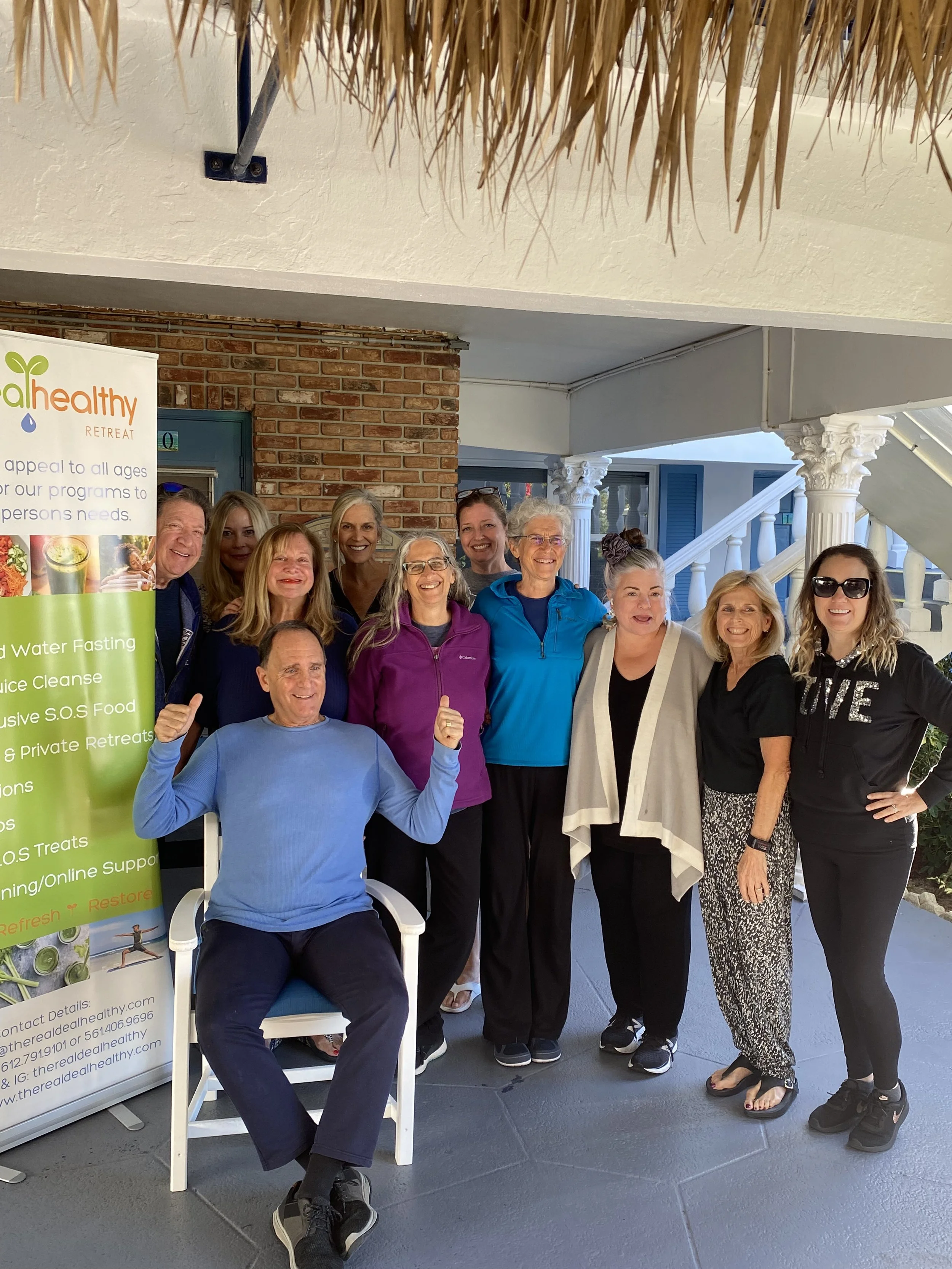
My second water fast was in 2022 at Balance for Life Health & Wellness Retreat in Florida with Dr. Frank Sabatino.

My first water fast was in 2015 at TrueNorth Health Center in Santa Rosa, CA. Dr. Alan Goldhamer is the founder of this state-of-the-art facility and a true pioneer in the arena of fasting. Read “Water Fasting Experiences.”
RESEARCH
Water fasting is not a cure, but rather a process to reset the immune system and facilitate the body's own healing mechanisms. There is evidence in research done on mice that fasting may have profound effects on cancer prevention, cancer progression, and the efficacy of treatment, especially alongside a plant-based diet. https://pubmed.ncbi.nlm.nih.gov/14587868/
Dr. Alan Goldhamer is the founder of the TrueNorth Health Center in Santa Rosa, California. The center is the largest facility in the world that specializes in medically supervised, water-only fasting. Dr. Goldhamer was one of the researchers in these studies, confirming the benefits of water fasting:
Treatment of hypertension - https://pubmed.ncbi.nlm.nih.gov/12470446/
Management of Stage 3, low-grade follicular lymphoma - https://pubmed.ncbi.nlm.nih.gov/26655228/
Total resolution of kidney issues, as well as partial regression of abdominal mass - https://www.semanticscholar.org/paper/Challenging-Case-in-Clinical-Practice%3A-Total-of-and-Myers-Butler/3a5a4e5eaa44e3a6961eeeb848ec1b0f1aefee04
Short-term water fasting can be done during cancer treatment or at home as a regular detox, but discuss this with your physician before deciding to do a water fast.
A short fast before chemo decreases oxidative stress to normal cells, reduces inflammation, and allows the toxic agents to work even more effectively on the cancer cells. There aren't drugs that can do this. https://pubmed.ncbi.nlm.nih.gov/18378900/ https://pubmed.ncbi.nlm.nih.gov/20157582/
A short fast before chemo can decrease side effects. https://pubmed.ncbi.nlm.nih.gov/21088487/
A short fast has been shown to inhibit tumor growth and metastasis in mouse models. https://pubmed.ncbi.nlm.nih.gov/22323820/
When we learned there was research on the efficacy of fasting, Joel fasted for 1-2 days prior to and after chemotherapy. This was easy for him to do since he was experiencing nausea and loss of appetite from the chemotherapy.
Here are some water fasting facilities around the U.S. I have done two water fasts: one at TrueNorth Health Center and the other at Balance for Life Health & Wellness Retreat.
WATER FASTING EXPERIENCES
-

I heard daily health lectures, like this one, by Dr. Douglas Lisle. In his book, The Pleasure Trap, he discusses why we get stuck in a self-destructive rut of eating unhealthy food.
-

While at TrueNorth, I attended cooking classes taught by a variety of culinary instructors like Cathy Fisher, founder of Straight Up Food.
-

The staff at TrueNorth serves a health-promoting diet for breakfast, lunch, and dinner. They equipped us with tools to continue healthy eating upon our return home.
-

The juice that broke my week-long water fast was made of beets and carrots. My body and taste buds were reset. What an interesting experience!
The Master cleanse or lemonade diet
from the book healing for the age of enlightenment by stanley burroughs

This is an easier fast than water-only fasting because the lemon juice and maple syrup provide some calories and may help with energy and hunger. The original Master Cleanse, developed by Stanley Burroughs, uses:
2 tablespoons fresh lemon or lime juice (approximately 1/2 lemon)
2 tablespoons maple syrup (Grade B is preferred, but Grade A or C are also acceptable)
⅒ teaspoon cayenne pepper
Spring water or purified water (medium or hot is preferred, but cold may be used if preferred)
Combine the juice, maple syrup, and cayenne pepper in a 10 oz glass and fill with water. Use freshly squeezed lemons or limes only. Drink 6 – 12 glasses per day during your cleanse/fast. Ensure you are having at least one bowel movement per day. If this is not happening, consider drinking 1 – 2 cups of a laxative tea like Organic Smooth Move tea from Traditional Medicinals.
Stanley Burroughs recommends this diet for 10-40 days 3-4 times per year.
Detox Through Diet
What we eat every day plays an important role in overall health. After my diagnosis, I focused on flooding my body with fruits and vegetables through smoothies, salads, soups, and juicing, while transitioning to a plant-based diet. A healthy diet also supports the body’s natural detoxification systems and gut health. For me, this wasn’t a temporary “detox diet”—it became a way of life.
A good diet facilitates regular detoxification. A poor diet not only hinders detox but also increases the risk of diseases, including cancer. Dr. Stanley S. Bass, ND, DC says, “A remarkable thing happens when a person improves the quality of the food he consumes. When the food you ingest is of higher quality than the tissues from which the body is made, the body discards the lower quality tissues to make room for the higher quality materials to make healthier tissue. But on our way to this body made up of healthier tissue, there will be a reset of many aspects of your body, including your gut.”
Visit the Diet page to learn more.
IMPROVED gut health
Hippocrates said it best, "All disease begins in the gut." As you learn to live a healthy lifestyle, many markers of optimal health will improve—one of which is your gut health, also referred to as the "amazing microbiome." The composition of the microbiota will be one of the most influential factors in your body’s ability to detox regularly. This study showed that eating more fruits, vegetables, and whole grains promotes bigger populations of beneficial bacteria. https://www.ncbi.nlm.nih.gov/pmc/articles/PMC3368382/
I get really excited each day knowing that even though toxins are still coming in, they have less impact on my body as I make healthy lifestyle choices. Toxins in, toxins OUT!
WEIGHT LOSS
Have you ever experienced the vicious cycle of going on a fad diet or overexercising to lose weight, only to regain it shortly afterward? I did this over and over again in my 20s. When I finally understood what I’m about to share, it made sense to me how yo-yo dieting may harm our bodies.
When we are exposed to toxins—and we all are—the body can store certain toxins in fat tissue, helping protect our organs from those harmful substances. The problem arises when the focus is solely on weight loss. When we lose weight without proper nutrition or through overexercising, we may lose fat, but toxins can remain in the body. As fat is lost, stored substances can also be released into circulation.
So, what is the right way to lose fat? By focusing on detoxing the body with whole foods, the goal is to shed excess fat while also supporting the body’s ability to eliminate toxins. This can lead to better overall health, less fat, more muscle, and lasting weight loss.
Joel lost approximately 80 pounds after surgery and chemotherapy. I’ll never forget an oncologist telling us that his weight loss may have saved his life. He believed that losing the excess fat also helped his body eliminate toxins that had been stored in fat tissue.
Detox Benefits

Detox Symptoms
WHAT TO EXPECT
As your body begins to detox through diet and lifestyle changes, you may experience detox symptoms. Dr. Stanley S. Bass calls this process “retracting.” When you drastically change your diet and lifestyle, toxins can enter circulation, which may temporarily overwhelm the body. Although this process can be difficult, it is part of the body’s adjustment. During this time, it is important to rest, de-stress, drink plenty of water, and get enough sleep.
A nurse I am blessed to work with says, “Healthy detox doesn’t cause problems; it exposes them.” Detox symptoms may last a few days or longer before beginning to subside. Symptoms can include fever, diarrhea, gas, nausea, frequent urination, headaches, fatigue, vomiting, joint and muscle pain, and sore throat.
Don’t get discouraged if you feel worse before you begin to feel better. The process may feel like a roller coaster for a while, but hang in there!

Click the image to read Dr. Stanley S. Bass’ excerpt on detox symptoms and other detox articles.
Detox Your Body and Home
PANIC PURGE
When I was first diagnosed, I immediately wanted to detox my body and my life. Unfortunately, out of fear, I stressed myself and my family by throwing out all the plastic in our kitchen, replacing questionable personal care products, and even giving away all of my clothes made from synthetic materials. I was determined to eliminate as many unnecessary exposures as possible.
I thought I might be the only one who took such drastic measures until I read Hope Never Dies by Rick Shapiro. He shared this about another breast cancer survivor: "The first thing she did was throw out all the chemicals in her house. She cleaned her closets and shelves of anything she felt was toxic. She threw out everything that contained hormones, antibiotics and toxins like lead, parabens and sulfates that may have contributed to her cancer. She tossed out all of her food, make up, shampoos and her microwave oven."
Wow! I wasn't the only one who reacted this way.
At the time, I thought the toxic substances in my environment might have contributed to the cancer. I assumed that if something was labeled toxic or potentially carcinogenic, it caused cancer. Over time, I learned that the relationship between environmental exposures and cancer is much more complex.
CHEMICALS, CARCINOGENS AND CANCER
There are known cancer-causing exposures, such as cigarette smoke, and many natural and man-made chemicals can interfere with the body's endocrine system. These endocrine disruptors can be found in plastics, cosmetics, detergents, pesticides, food packaging, flame retardants, and other everyday products. https://www.niehs.nih.gov/health/topics/agents/endocrine/index.cfm
But I began asking bigger questions: Does every potentially harmful chemical cause cancer? Do they create mutagens, a physical or chemical agent that permanently changes genetic material?
T. Colin Campbell, Ph.D., discusses this issue in Whole: Rethinking the Science of Nutrition, explains the Carcinogen Bioassay Program, which tests the ability of chemicals to cause cancer in lab rats and mice. The animals are dosed with amounts 1,000 to 10,000 times higher amounts that humans will ever experience. If the animals develop cancer, then that chemical is labeled a carcinogen. Campbell poses an important question — should we assume that if large doses cause cancer in animals, then smaller doses will do the same in humans? The answer is no! https://www.ncbi.nlm.nih.gov/pmc/articles/PMC4949043/
Dr. Campbell also discusses environmental chemicals and nutrition in The China Study and The Future of Nutrition, stating that it takes more than just chemicals to cause cancer. He says that, “Population studies show almost no evidence of casual associations of environmental chemicals with human cancer. However, poor nutrition is not associated with only one type of cancer, but with the vast majority. While mutations do happen, a poor diet (one that is not plant-based) increases their occurrence and reduces our ability to keep those mutations in check.”
There is still much to learn about chemicals, carcinogens, and cancer. I realized I didn't need to live in fear of every environmental exposure—or try to live in a bubble.
WHAT I LEARNED
Our bodies have natural systems designed to process and eliminate unwanted substances. Rather than becoming anxious about eliminating every possible exposure, I began focusing primarily on supporting my health through the five BASICS: Diet, Hydration, Exercise, De-Stress, and Sleep. Does that mean I intentionally expose myself to unnecessary chemicals? No! I still choose healthier products and reduce exposures where I reasonably can. But I no longer feel the need to panic. Phew—less stress!
DETOXING MY HOME TODAY
I still believe reducing unnecessary exposures is a worthwhile part of caring for my health. Below, I share the changes I've made throughout my body and home. It's an exhaustive list, and you don't need to do everything I did! Pick and choose what makes sense for you and your budget. For me, healthy food and filtered water are at the top of the list. Visit the Diet and Hydration pages to learn more.
DETOX YOUR BODY - head to toe
HAIR
Every six weeks for over 25 years, I paid a fortune for chemically treated hair. You name the treatment, and I probably did it! I even had hair-straightening treatments, likely containing formaldehyde, a couple of times each year. When I was diagnosed, I stopped all hair treatments in search of healthier options. Then COVID hit, giving me time to let my hair heal and really research the products I was using. For a season, I chose to avoid or minimize the following ingredients to reduce my chemical exposure:
Ammonia
Hydrogen peroxide
DMDM Hydantoin
Lead Acetate
Parabens (methylparaben, ethylparaben, propylparaben, butylparaben, and anything else ending in paraben)
Phthalates (DEP, DBP, DEHP) and artificial fragrances
PPD (p-phenylenediamine)
Resorcinol
Sulfates (SLS and SLES)
Toluene
Triclosan — In 2017, the FDA deemed this ingredient harmful due to disrupting hormones, but I couldn't find specific research on this.
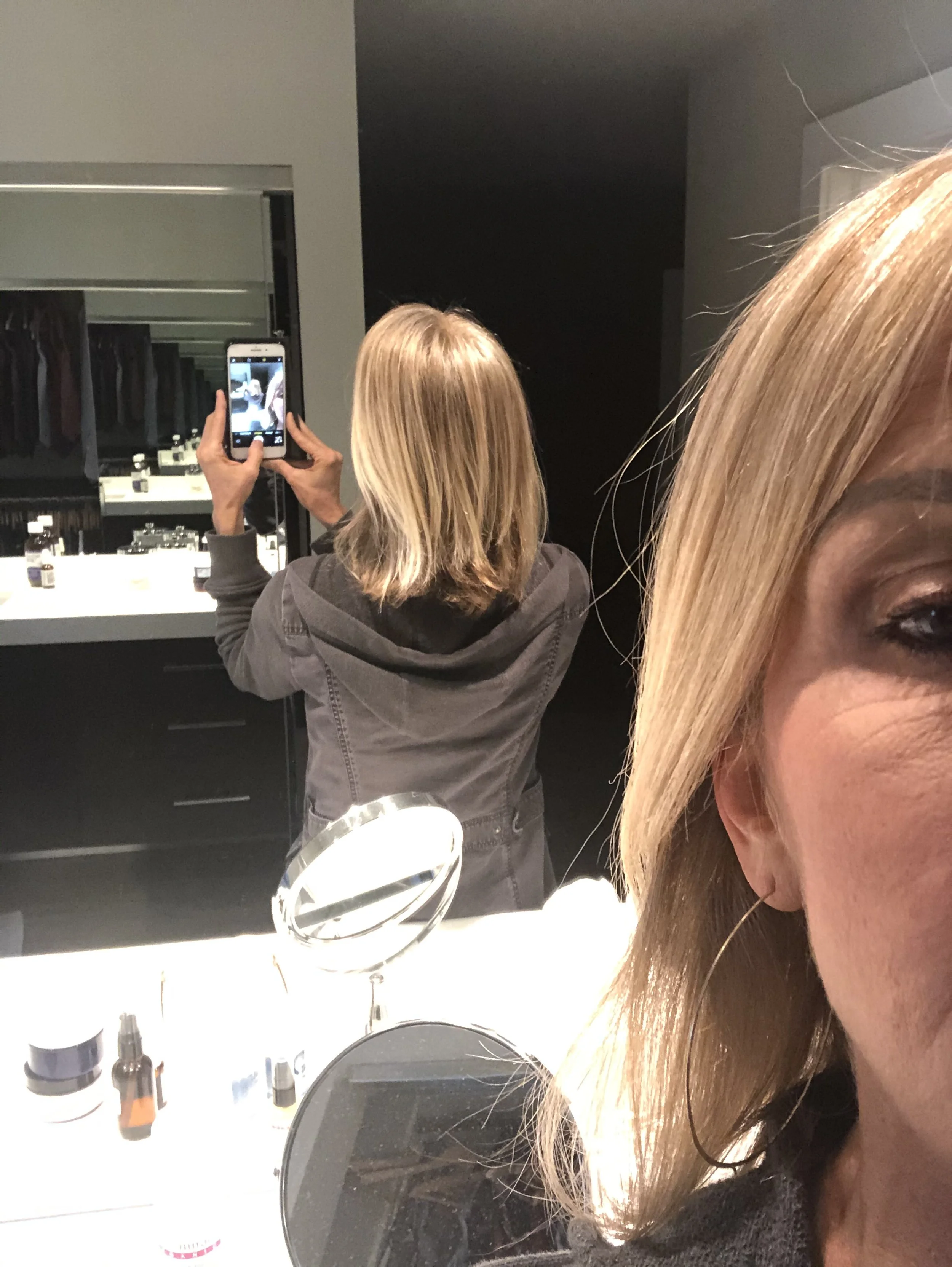
During COVID, I cut my hair and gave it a break from the fake (treatments) for over a year.
My hair journey is still evolving—including how I color my hair today! I continue experimenting and looking for more plant-based options that work for me.
Read “Hair Reset” for more of my story, and visit Julie’s Online Favorites for the hair products I currently use.
FACE
I grew up in South Florida, and every Saturday in high school, my friends and I spent the entire day at the beach. We even covered ourselves in baby oil to get a deeper tan—including our faces! It was incredibly fun, but definitely not ideal for healthy skin. Around age 45, I began paying more attention to my sun-damaged skin and started seeing a dermatologist regularly. Over time, though, I’ve also learned to embrace aging rather than fight it. My wrinkles represent years of living, learning, and hopefully gaining a little wisdom along the way!
Today, I focus more on my overall health and creating beauty from the inside out. I still love walking on the beach and being in the sunshine, and I’ve decided I’m not going to live in fear of every wrinkle. I want to enjoy the sun I love while taking care of my skin and embracing the aging process. One thing is for sure: since changing my diet, I no longer have breakouts. I never struggled with major acne, but I could almost always count on at least one small breakout every month. Now, I don’t get them at all!

BEAUTY FROM WITHIN — Diet, HYDRATION, & Skin Health
Your skin can be a reflection of your overall health. While aging naturally affects our skin, I am learning that healthy habits—diet, hydration, exercise, de-stressing, and sleep—along with the right products can help support healthier-looking skin as we age. Regular detoxification is also important to beauty from the inside out. Supporting the liver and the body’s natural detoxification processes can benefit the skin. As your overall health improves, you may notice changes in acne, blemishes, skin appearance, and even body odor.
Vegetables: This study found that a higher intake of vegetables was associated with less skin wrinkling and signs of skin aging. https://pubmed.ncbi.nlm.nih.gov/11293471/
Gut Health: This study found that improving healthy gut bacteria through probiotic supplementation positively affected aspects of skin function and appearance. https://pubmed.ncbi.nlm.nih.gov/27596801/
Fruits & Vegetables: This study found that consuming fruit and vegetable concentrates improved skin microcirculation and positively affected skin hydration, density, and thickness. https://www.karger.com/Article/Abstract/330521
This study refers to the consumption of Juice Plus+ fruit and vegetable concentrates. Visit the Cam Treatment page to learn more about Juice Plus+.
Beauty is actually found in the kitchen!
What we eat can affect the way our skin looks and ages. A healthy, plant-rich diet helps reduce inflammation and provides many of the nutrients the body needs to produce collagen naturally. Rather than focusing only on collagen supplements, I focus on giving my body the nutrients it needs through fruits, vegetables, whole grains, and legumes.
Beta-carotene from colorful fruits and vegetables can accumulate in the skin and contribute to a healthy, natural glow. What we don't eat matters too. I try to limit refined sugar, highly processed foods, and fried foods while filling my plate with plants.
Hydration also impacts skin elasticity and appearance. It also provides protection against infection, sun damage, and skin disorders. The ability of skin cells to hydrate depends not only on the amount of water consumed, but also the products that are applied to the skin. Many skin care products are filled with chemicals that clog the pores, dry the skin, and get absorbed into the body. Many manufacturers hide behind the ingredient “fragrances” as a way to hide even more harmful chemicals. The best solution is to use natural products as much as possible. Visit EWG.org research personal-care products, and visit the Julie’s online favorites page for face products I use.
mouth
According to the Mayo Clinic, “Studies suggest that oral bacteria and the inflammation associated with a severe form of gum disease (periodontitis) might play a role in some diseases.” I am grateful for all I have learned from my biological dentist. Read “Biological Dentistry Journey” for my full story. My biological dentist also introduced me to coconut oil pulling to support healthy teeth and gums. I swish a spoonful of coconut oil for 10–15 minutes, spit it into the trash, and then brush my teeth.
And remember F.B.I. twice a day: Floss, Brush, Irrigate! Visit the Julie’s Online Favorites for the oral-care products I use.
ARMPITS
I’ve noticed an interesting connection between my gut health and body odor. As my gut health improved, so did my body odor—to the point that I rarely need deodorant anymore...I think! :) I even notice that occasionally after eating at a restaurant, despite ordering something healthy, I may have a slight odor the next day. Isn’t that interesting?
When I do use deodorant, I choose products with ingredients I feel good about using. Visit Julie’s Online Favorites for a homemade deodorant recipe and other deodorant options.
hands and feet
Hand soap and moisturizers are used every day, often multiple times on our skin, so it is important to use healthier options. Antibacterial soap is no more effective than regular soap and water, and it is true that habitual use can lead to antibiotic resistance. Bacteria on our skin is actually beneficial and protects us from pathogens. Using antibacterial soap regularly can wipe out our beneficial skin microbiome, leading to increased risk of disease. https://www.ncbi.nlm.nih.gov/pmc/articles/PMC2446461/
Visit the Julie’s Online Favorites page for healthier product options for hands and feet.
whole body
Whole body care has been an important part of my healing. Not only using healthier body soap and moisturizer, but also taking detox baths and going in the sauna several times each week. Here are a couple of other reminders.
SKIN BRUSHING
Skin/dry brushing opens pores and stimulates the lymphatic system, as many of the lymph vessels lie just under the skin. Use a skin brush before showering and brush toward your heart, under arms, behind knees, inner thighs, and bottoms of the feet. Do not brush your face or breasts. Watch this video for directions on skin/dry brushing.
SUNBLOCK
Despite popular thinking, you actually want to expose your skin to the sun without sunblock. Attempt to get out in the sun for 15-20 minutes each day to get adequate vitamin D (on the palms, eyes, or stomach). Many studies show that plant foods contain nutrients that can protect against ultraviolet (UV) sun damage. Beyond the initial sun exposure, use coconut oil or pure zinc oxide for sunscreen. Visit the CAM Treatment page to learn more about vitamin D.
DETOXING YOUR HOME
AIR QUALITY
Choose an air filter that removes pollen, outdoor air pollution, mold, mildew, methane, benzene, phthalates, asbestos, formaldehyde, lead, radon, smoke particles, pet dander, dust, dust mite particles, PBDEs, and VOCs. Polybrominated diphenyl ethers (PBDEs) are chemicals that are added to certain manufactured products (such as furniture foam padding, carpet/rugs, and draperies) to reduce the chances that they will catch on fire. Volatile organic compounds (VOCs) are chemicals in paints, paint strippers, cleaning supplies, permanent markers, pesticides, glues and adhesives, etc.
I chose Air Doctor devices for our bedrooms and living areas. One thing I love is the auto setting—the fan automatically speeds up when air quality changes, such as when something burns on the stove.
AIR QUALITY IDEAS
Open windows on cool, breezy days to bring in fresh air.
Use appropriate ventilation when cooking and cleaning.
Walk outside each day and enjoy the fresh air.
Be sure your “circulating air button” is always ON inside your car.
Buy indoor plants, as they may reduce pollutant levels (particularly formaldehyde, benzene, and toluene). https://pubmed.ncbi.nlm.nih.gov/32170619/
Use an air purifier in the rooms where you spend the most time.
COMMON SOURCES OF INDOOR POLLUTION
Cooking, heating fuels, fireplaces, and smoke (oil, gas, kerosene, coal, or wood)
New furniture, carpeting, and building materials
Insecticides and household chemicals
Paints, glues, adhesives, and cleaning products
Artificial fragrances, candles, and air fresheners


WATER quality
I may have gone a little overboard with water filters! I have a whole-house carbon filter that filters the water throughout my home—for drinking, showering, dishwashing, and laundry. I also have additional filters for specific uses and for traveling. Visit the Hydration page to learn more about water quality and see the filters I use.
BEDROOM
We spend a lot of our lives in our bedrooms, so I became more intentional about the materials surrounding me while I sleep. I explored more natural bedding and even purchased a natural rubber mattress to reduce chemical exposure. Unfortunately, it was so uncomfortable that I eventually went back to my Sleep Number bed! I learned that reducing unnecessary exposures is important to me, but getting a comfortable, restful night's sleep is important, too.
There isn't solid evidence linking conventional bedding to cancer, so find the balance that works for you. If you're shopping for a mattress, lie on it first—comfort matters! You can also make smaller changes by choosing bedding made from more natural materials.
Visit the Julie’s Online Favorites for bedding options and the Sleep page to learn more about creating a healthy sleep environment.
CLOSET
After my diagnosis, I went to the extreme and gave away almost all of my clothing made from synthetic materials. I now realize that wasn't necessary! Still, I love the way natural fabrics feel, so today I choose them whenever possible. I read clothing labels now just like I read food labels. I also support companies that use healthier materials like Fisher’s Finery. I read labels on clothing now, just like I do on food.
CHOICE OF MATERIALS
After studying different fabrics, these are the materials I generally look for and those I try to minimize:
I LOOK FOR: Bamboo, cashmere, organic cotton, cupro, flax, hemp, jute, linen, lyocell, modal, piña fiber, ramie, seaweed, silk, tencel, and wool.
I MINIMIZE: Acetate, terylene, terylene, triacetate, acrylic, dacron, elastane, lycra, nylon, polyester, rayon, synthetic, and fabrics treated to be static-resistant or wrinkle-free.
HEALTHIER PRACTICES
I also prefer loose, comfortable clothing whenever possible, rather than clothing that feels tight or restrictive.
Here is an example of a bra that is made from healthier material.

All of my beautiful clothes stacked up and ready to give away! I definitely went a little overboard, which I attribute to going through the stages of grief. :)
KITCHEN
The kitchen was one of the first places I tackled after my diagnosis. Out of fear, I initially went a little overboard—getting rid of plastic, replacing cookware and food-storage containers, and even removing our microwave! As I learned more, I found a better balance and added back some conveniences.
I still love my glass containers and cast-iron cookware, but I've added back a few plastic lids for convenience. Since they don't touch the food, I don't worry as much.
But ultimately, I realized that the most important change I could make in my kitchen wasn't what I removed—it was the food I put in it.
Visit Julie’s Online Favorites for my favorite kitchen products, shopping suggestions, and links to purchase.
Visit Julie’s Kitchen to see how I I put healthy eating into practice—from setting up my kitchen and food prep to recipes, shopping lists, and simple solutions for eating well.
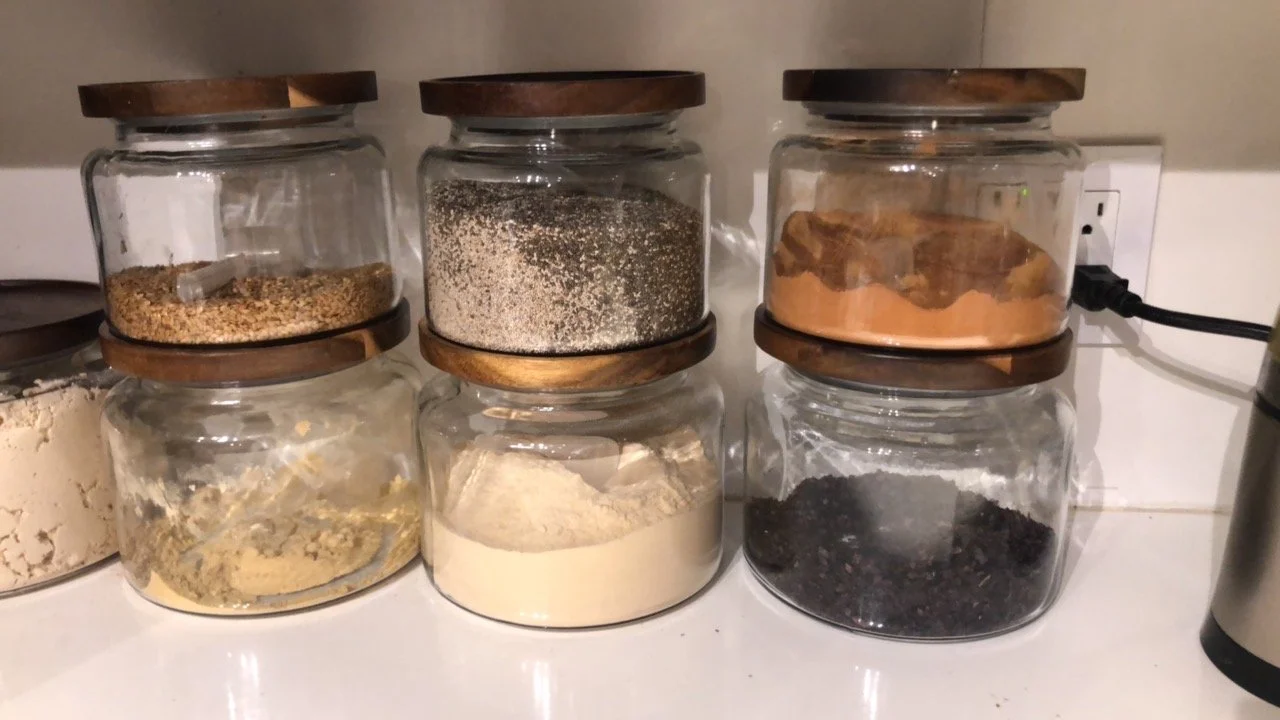
I moved to mostly glass dishes and storage containers. This is our smoothie station.
CANDLES
I used to occasionally burn scented wax candles occasionally in our home. Even though they were 100% natural soy wax, any scent increased Joel’s nausea during cancer treatment, so I switched to battery-operated candles.
I ended up loving them! Now, my candles are on timers and automatically turn on every evening. They create such a calming atmosphere—and no fragrance needed!

Cleaning Products
There are so many great choices for healthier cleaning products. VisitEWG’s Guide to Healthy Cleaningto find highly rated options. You can also make simple DIY cleaners using common household ingredients like baking soda and distilled, white vinegar. Here is a great article about 3 DIY all-purpose cleaners that actually work, using common household ingredients. https://www.insider.com/guides/home/homemade-all-purpose-cleaners
I use cleaning cloths that require only water for bathrooms, windows, glass, and stainless steel, along with reusable paper towels that double as kitchen cloths.
Next Up...
GUT HEALTH
Detox combined with a good routine of the basic health habits (diet, hydration, exercise, de-stress, and sleep) results in the improvement of many markers — one of which is your gut health, also referred to as the "amazing microbiome."